
The Zimbabwe National Chamber of Commerce (ZNCC) and the Zimbabwe Agricultural Society (ZAS) have strengthened their partnership to accelerate agricultural transformation by improving market access, promoting technology adoption and deepening links between producers, finance and commerce.
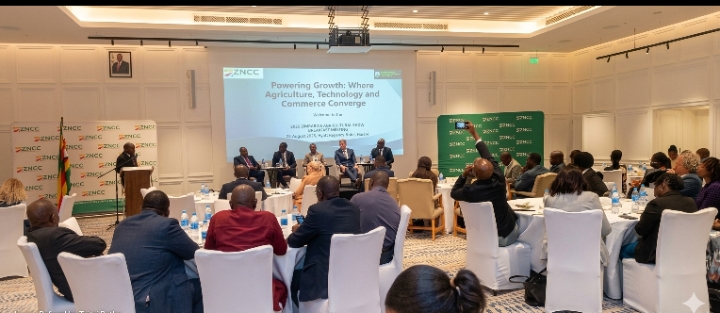
The two organisations held a joint breakfast meeting at the Hyatt Regency Hotel on Tuesday under the theme “Powering Growth: Where Agriculture, Technology and Commerce Converge,” part of the 116th Zimbabwe Agricultural Show programme.
The gathering of different stakeholders explored ways of turning Zimbabwe’s agricultural production capacity into greater economic value through stronger, more efficient value chains.
ZAS president Ngoni Kudenga described the partnership as significant in bringing together agriculture, technology and commerce, sectors he argued could no longer be treated separately. The collaboration, he explained, should forge practical connections between producers, investors, processors and markets, citing improved market intelligence, stronger farmer aggregation, structured financing linked to offtake agreements, technology adoption and policy dialogue as key focus areas.
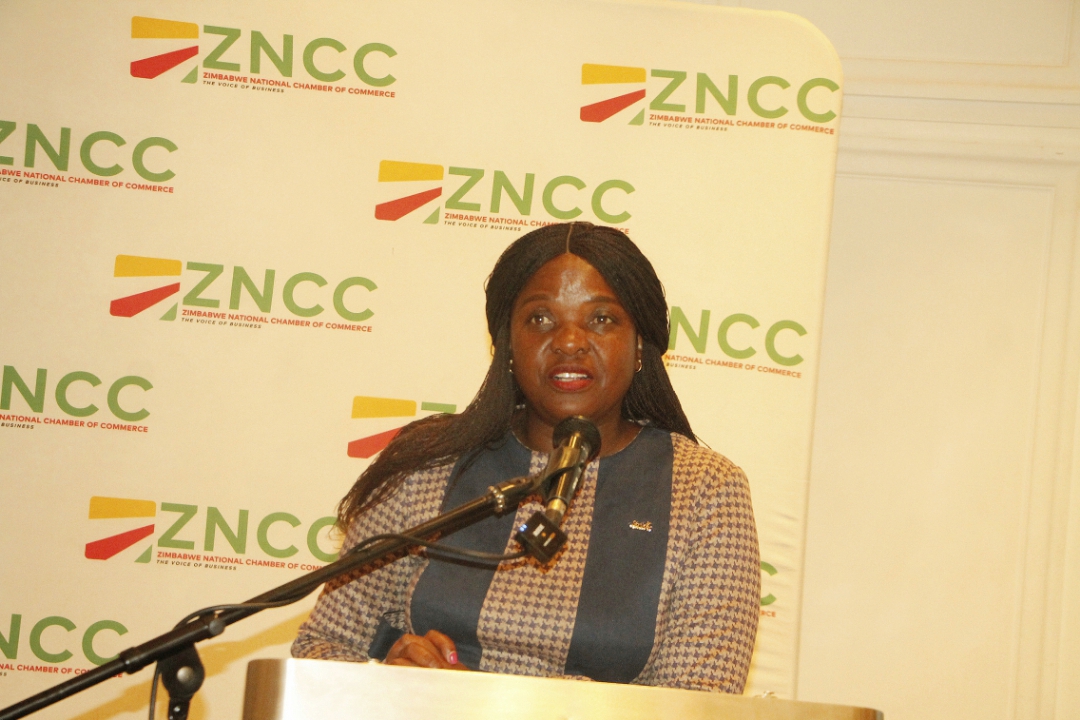
ZNCC president Josephine Takundwa noted that Zimbabwe continued to face a disconnect between production and the systems needed to convert that production into sustainable income, resulting in production without procurement, demand without adequate supply, and investment opportunities without the capital required to unlock them. The success of the ZNCC-ZAS platform, she argued, should ultimately be judged by the partnerships, contracts and commercial opportunities it generates.
ZNCC chief executive Christopher Mugaga pointed to the chamber’s focus on positioning Zimbabwean producers to benefit from regional and international trade opportunities, citing the country’s agricultural potential and its ties to markets such as China as areas that could be unlocked through stronger commercial partnerships.
Representing the Ministry of Agriculture, Mechanisation and Water Resources Development, Abraham Mashumba welcomed the initiative, noting that it complemented government’s Agriculture and Food Systems Transformation Strategy, which targets a US$15.8 billion agricultural economy. Growing the sector, he explained, required closer integration with industry, commerce, finance and technology, and business-led platforms such as the ZNCC-ZAS partnership were important in translating policy into practical economic activity.
Louis Muhigirwa, the deputy representative of the United Nations Food and Agriculture Organization, argued that agricultural transformation could not be achieved through production alone. The real measure of success, he explained, was whether producers could reliably access profitable markets, add value to their products and compete within modern value chains — noting that smallholder farmers and agribusinesses thrive when connected to efficient markets, quality infrastructure, financial services, digital technologies and supportive policies.
“Market access creates incentives for productivity, investment and innovation,” he said, adding that it could also generate employment, particularly for women and young people, while strengthening economic resilience.
Climate change, Muhigirwa observed, had become a permanent variable for farmers and agricultural businesses, requiring a shift from reactive crisis management to proactive, data-driven decision-making. He pointed to resilient infrastructure, improved data use and genetic innovation as tools that could help farmers adapt, and emphasised that agriculture needed to be treated as a viable, profitable business rather than a subsistence activity. Technological advances, he cautioned, would have limited impact unless matched by investment in infrastructure, logistics, storage, quality systems and marketing.
The United Nations, he stressed, remained committed to supporting Zimbabwe’s agricultural modernisation through collaboration with government, the private sector, research institutions, financial institutions and development partners.
“No single stakeholder can address the challenges we face,” he said, insisting that government must provide an enabling environment, the private sector must drive investment and innovation, financial institutions must expand access to finance, and producers must embrace new technologies and opportunities.
The breakfast meeting also featured a panel discussion titled “Connecting Agri-Producers to Markets: Overcoming Barriers Through Innovation and Policy,” moderated by Kudzanai Sharara. Panelists included Dayford Nhema of the Ministry of Industry and Commerce, Tatenda Marume of ZimTrade, Archie Dongo Director of N Richards, Dustin Willcox of Food Lover’s Market and Moses Chihuri of Spar Zimbabwe. Discussions centred on strengthening producer-market linkages, expanding financing opportunities, reducing market barriers, improving compliance with standards and positioning Zimbabwean agricultural products for stronger domestic, regional and international competition.
Organisers said the engagement was intended to move beyond dialogue towards practical collaboration capable of connecting Zimbabwe’s farmers and agribusinesses to markets, capital, technology and investment, positioning agriculture, technology and commerce as interconnected drivers of economic transformation rather than isolated components of the economy.


