
Zimbabwe’s government has joined the World Bank and the United Nations Population Fund (UNFPA) in a coordinated push to eliminate period poverty, framing menstrual health as an economic and human capital priority rather than a purely social concern.
The partnership was formalised at the launch of the National Menstrual Health Education Package in Harare, where World Bank Country Manager Eneida Fernandes laid out the financial stakes. While 90 percent of Zimbabwean girls complete primary school, only one in 14 go on to finish upper secondary education, she said, with menstrual-related absenteeism a significant driver of that drop-off. Fernandes said the resulting lost learning and skills translate directly into fewer pathways to productive employment. “This is not only a human capital issue. It is an economic issue, and it is a job challenge,” she said.
Fernandes added that the package’s reach, targeting girls, boys, teachers, caregivers and community leaders through interactive methods, positions it to shift attitudes in both rural and urban communities. She also pointed to a secondary economic benefit: menstrual health investment could spur local business growth by expanding manufacturing of affordable menstrual products.
UNFPA Zimbabwe Country Representative Miranda Tabifor confirmed her organisation would anchor the implementation phase, working with government and partners to roll the package out in pilot districts before scaling nationally. She characterised the initiative as a collective response to decades of silence around menstruation, saying accurate, age-appropriate information brought into schools and communities would help dismantle myths and stigma while feeding into the broader sexual and reproductive health and rights agenda.
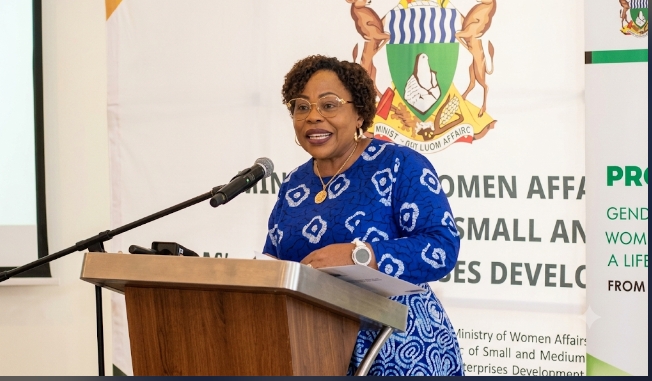
Minister of Women Affairs, Community, Small and Medium Enterprises Development Monica Mutsvangwa cast the government’s role as convening and sustaining the effort across sectors. She said menstrual health could not be treated as a women’s issue alone. “Any country which needs to grow its economy will have to look at issues of gender equality and women empowerment as a decisive strategic step to be economically independent,” she said.
Mutsvangwa said the package’s development had drawn on consultations with government ministries, development partners, civil society organisations, educators, academics, health professionals, community leaders and young people, and stressed that youth voices had shaped its content directly. She also challenged the private sector to support production and distribution of affordable menstrual products, and cautioned that the initiative’s success would rest on implementation rather than the existence of materials alone.
Both the World Bank and UNFPA representatives framed the partnership as long-term, with pilot districts serving as the test for a package that includes the Zero Taboos game, an interactive tool designed to help young people discuss menstruation and challenge misconceptions. The launch was attended by deputy ministers Jennifer Mhlanga and Kiven Mutimbanyoka, with Mutimbanyoka, a HeForShe champion, positioned as part of efforts to draw men and boys into the conversation.


