
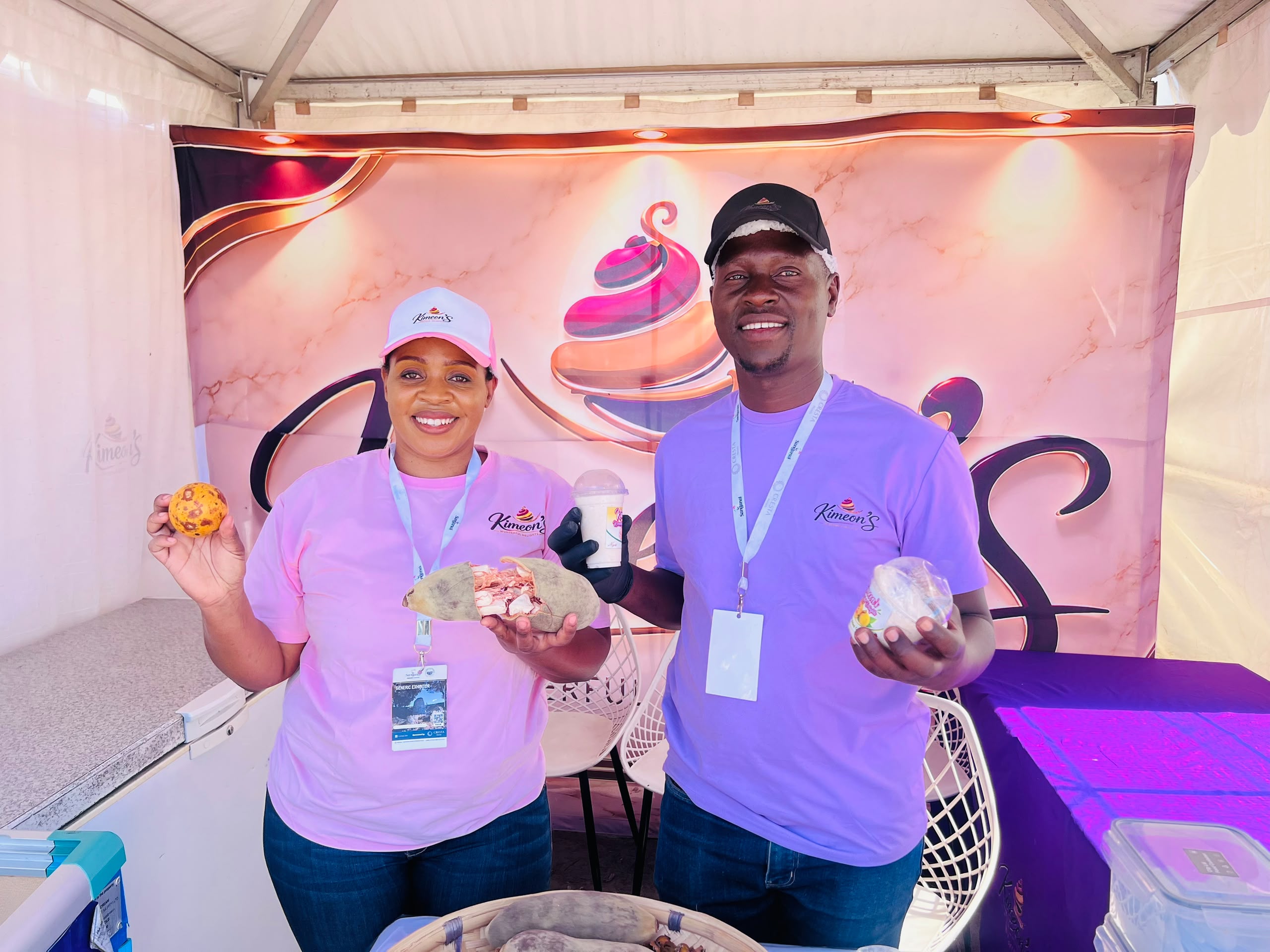
Zimbabwean entrepreneurs Kokerai Kimeon Vambire and his wife Catherine have turned indigenous fruits into premium handmade ice cream, opening a new avenue for local value addition and gastronomy.
The couple, who run Kimeon’s Handmade Premium Ice Cream, showcased a range of unusual flavours at the recently concluded Sanganai/Hlanganani/Dzimbahwe World Tourism Expo, where the products drew strong customer interest and brisk sales.
Vambire said the venture grew out of the abundance of wild fruits found in Zimbabwean communities and a desire to present them in a form that could reach a broader market.
“We can give our people what they are used to eating, what they are used to buying in the streets, what they are used to take from the forest,” he said.
The company’s flavours include matamba, tsubvu, marula, shumha, nhunguru, mapfura and baobab. Vambire said matamba, a sweeter variety of the fruit, was among those used to create the ice cream displayed at the expo.

Tsubvu, commonly known as smelly berry, has also been worked into the range, while marula, traditionally associated with beverages, has been reworked into a smooth, creamy dessert. The company markets itself as offering consumers a new way to enjoy fruits usually eaten fresh or dried.
Vambire said the produce is sourced from Mwenezi, Chiredzi and Bikita, tying the business directly to the communities where the fruits grow.
He described the approach as part of a broader push to add value to local resources rather than leave indigenous fruits largely in their traditional forms.
“We are saying let us support local gastronomy, let us support the vision and move with the vision. Let us add value. This is what we are starting with. This is what we are running with,” he said.
Vambire said the Sanganai platform had done more than generate sales, creating commercial openings for the business that extend beyond the expo itself.
The couple’s showing at the tourism event points to the potential for Zimbabwe’s indigenous food products to feature in a wider gastronomy offering, while building businesses around resources drawn from local communities. Their work also demonstrates how traditional fruits can be adapted into new products that link the country’s food heritage to contemporary consumer tastes.


