
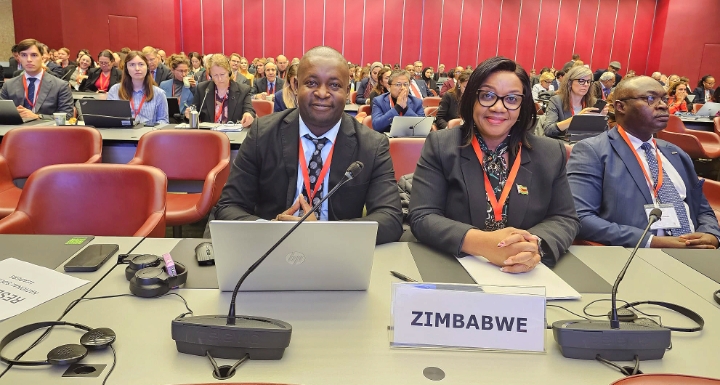
Zimbabwe has renewed its pledge to International Humanitarian Law (IHL), setting out the legislative and institutional measures it is taking to strengthen compliance with its international obligations and protect civilians during armed conflict.
The pledge was made on November 4 at the Implementation Forum 1 of the Global IHL Dialogue, where participants discussed how states can turn the initiative’s outcomes into effective domestic action.
Presented by the permanent secretary for the Ministry of Justice, Legal and Parliamentary Affairs Mrs Vimbai Nyemba, Zimbabwe cited Sections 326 and 327 of its Constitution as the foundation of its commitment to upholding IHL. It also said the Government has enacted several laws to reinforce its legal framework, including the Geneva Conventions Act, the Genocide Act, the Anti-Personnel Mines (Prohibition) Act and the Chemical Weapons (Prohibition) Act. These measures were presented as evidence of the country’s efforts to align national legislation with its humanitarian obligations.
Zimbabwe also stressed that institutional coordination is key to implementation. It said the Ministry of Justice, Legal and Parliamentary Affairs continues to deepen cooperation through the Inter-Ministerial Committee on Human Rights and International Humanitarian Law.
The Government is also reviewing existing legislation, including the Criminal Law (Codification and Reform) Act [Chapter 9:23], to address emerging challenges and improve compliance with humanitarian principles.
Beyond legal reform, Zimbabwe is working with the International Committee of the Red Cross (ICRC), defence institutions and the Zimbabwe Red Cross Society to strengthen military training and operational measures that protect civilians and essential infrastructure during armed conflict.
The country said it remains ready to work with stakeholders, including the Inter-Parliamentary Union, the ICRC and other international partners, to promote universal respect for IHL.
The Global IHL Dialogue, held in Geneva on November 3 and 4, brought together states and other stakeholders to discuss practical ways of implementing the outcomes of the Global Initiative to Galvanize Political Commitment to International Humanitarian Law.


