
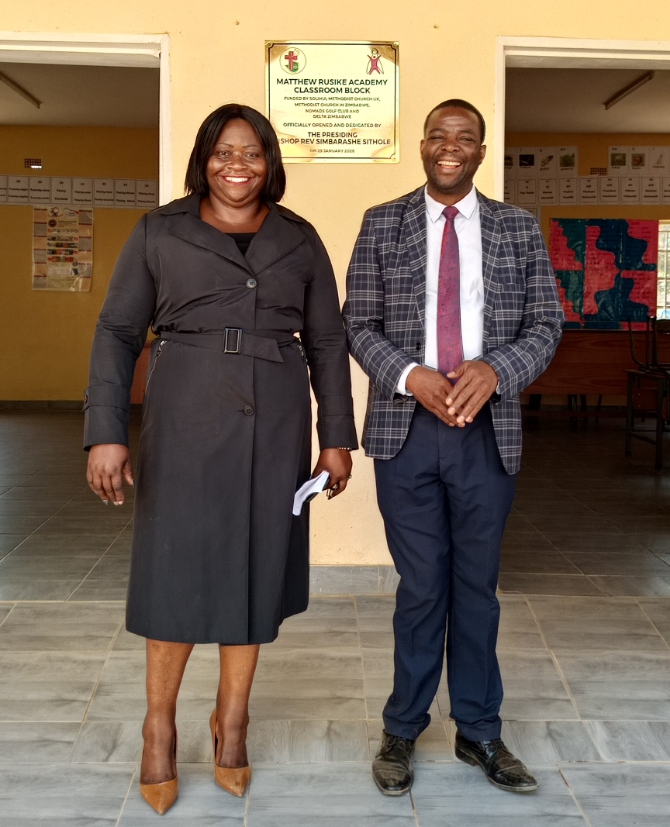
Delta Corporation Limited has to date invested approximately US$70,000 in St Matthew’s Rusike Children’s Home over the past seven years, strengthening its long-standing partnership with the institution through projects targeting education, security, renewable energy, water, food security and child welfare.
Speaking at a handover ceremony at the home, Delta Corporation General Manager, Corporate Affairs, Patricia Murambinda, said the company had supported the institution for more than two decades, with its annual contribution increasing from about US$5,000 to US$10,000 from 2019.
Murambinda said the partnership demonstrated Delta’s commitment to creating shared value within communities where it operates.
“Today we are not simply handing over infrastructure and equipment. We are investing in people. We are investing in our children who are vulnerable. We are investing in a future where every child has the opportunity to grow in a safe, healthy and nurturing environment,” she said.
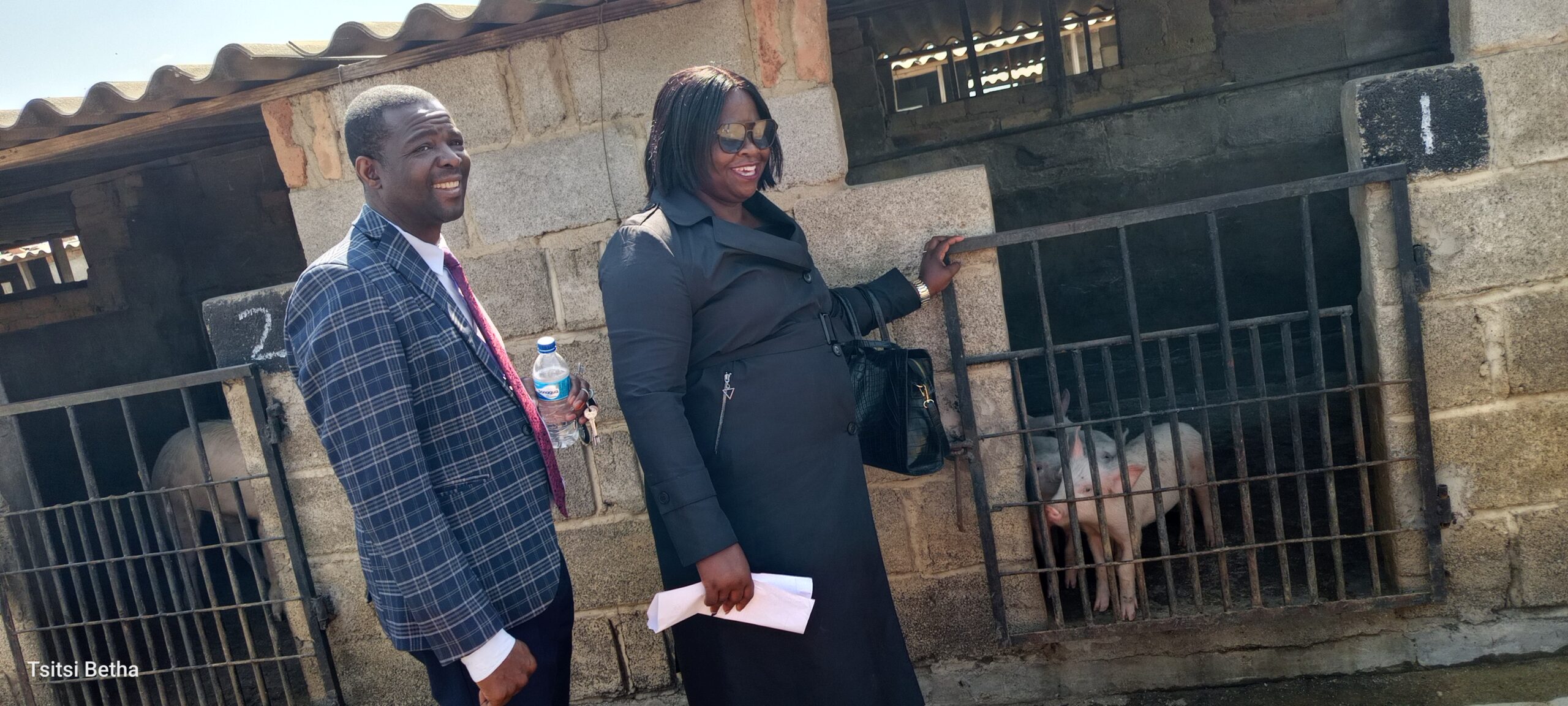
Among the projects supported by Delta are the installation of a CCTV security system, construction of a classroom block, partial solarisation of the children’s home and school, installation of a shade net for the greenhouse, solarisation of boreholes, water piping and storage infrastructure, as well as repairs to the piggery, poultry facilities and fish ponds.
Murambinda said the CCTV system was among the first major interventions undertaken after the institution experienced security challenges.
“Security really matters. They were having issues with the children’s homes being broken into by thieves, so we had to quickly move in and put that CCTV,” she said.
She said the classroom block was supported under Delta’s schools assistance programme, which has seen the company invest in educational infrastructure in communities across Zimbabwe.
The company has also supported the institution’s transition towards renewable energy through solarization projects.
“For us, it talks to our sustainability pillar of climate action and clean energy. This is why we said we will come in and partner you and make sure that we bring clean energy to this institution,” said Murambinda.
The company’s agricultural support is also intended to improve food security and strengthen income-generating activities at the home.
Murambinda said Delta was particularly encouraged by the greenhouse project, noting that the production of vegetables was contributing to the children’s nutrition while supporting the institution’s efforts towards self-sufficiency.
“Smart agriculture is very key for us. We are big consumers of agricultural products in making our products, including sorghum for Chibuku, barley for our lager beers and maize for some of our other products,” she said.
The company also supported the solarisation of the first borehole before extending assistance to the second borehole, piping infrastructure and water storage tanks.
Murambinda said water security remained an important sustainability priority for Delta, adding that the company would soon be involved in another major water project in Harare in partnership with The Coca-Cola Company.
The repairs to the piggery, poultry facilities and fish ponds are expected to strengthen the home’s income-generating projects while improving access to protein-rich food for the children.
“These are not isolated interventions. They form part of a long-standing partnership aimed at building resilience, self-reliance and opportunity,” Murambinda said.
She added that Delta’s approach to sustainability extended beyond environmental protection to include education, water access, food security, renewable energy and economic opportunities.
“We firmly believe that businesses flourish when the communities around them flourish. That belief continues to guide our investments across Zimbabwe,” she said.
Speaking at the same ceremony, St Matthew’s Rusike Children’s Home Director, Rev. Mutenzwa, said the institution currently accommodates 59 children, against a capacity of 100.
The children are referred to the home through the Department of Social Development and come from different backgrounds, including cases involving abuse, neglect and children who have previously lived on the streets.
Mutenzwa said the home seeks to provide the children with stability, care and opportunities that will enable them to become responsible and productive citizens.
The children are accommodated in a family-based setting across six houses, with caregivers supported by social workers, administrative staff and other personnel.
“We try to give them a life in the future,” Mutenzwa said, explaining that the family setup is designed to provide children with an environment that resembles a home.
The institution also runs income-generating projects and agricultural activities to support its operations and food requirements.
Education remains a key component of the home’s work, with the institution supporting children from secondary school through to higher education.
Mutenzwa said the organisation was developing its secondary school into a boarding institution. The school currently has approximately 400 students, with about 200 already accommodated under the boarding programme.
The institution is also developing an academy which currently provides education from Early Childhood Development through Grade 3, with plans to expand the programme to Grade 7.
Mutenzwa said the objective was to provide quality education to children who had experienced trauma while also extending the institution’s educational support into surrounding communities.
The home’s impact also extends beyond its residential facility in Epworth.
It operates community outreach programmes in Chachacha in Midlands Province and Nyathi in Matabeleland South, supporting vulnerable children who remain within their communities.
The organisation also runs a foster care programme in partnership with the church, allowing children to spend school holidays with foster families and experience environments outside the residential home.
According to Mutenzwa, the foster care programme also assists children transitioning out of institutional care when they reach the age of 18, with foster families continuing to provide support to some of the young people.
Murambinda commended the management, caregivers and staff at St Matthew’s Rusike for their commitment to supporting vulnerable children.
She highlighted the progress of former residents who have gone on to university, saying their achievements demonstrated the importance of providing children with education, stability and encouragement.
“To the children, never allow your circumstances to define your future. Within each one of you lies enormous potential. Continue to dream boldly, work diligently, value your education and believe that your future is brighter than your present,” Murambinda said.
She added that Zimbabwe needed the talents, ideas and leadership of the young people being raised at institutions such as Rusike.
The Delta executive said the company would continue to build partnerships that contribute to community development and national progress.
“The true measure of any organisation is not only the products it makes, but the positive difference it leaves in the lives of people and the communities it serves,” she said.
The handover reinforced the importance of collaboration between the private sector, government, churches, communities and development partners in creating sustainable support systems for vulnerable children.


