
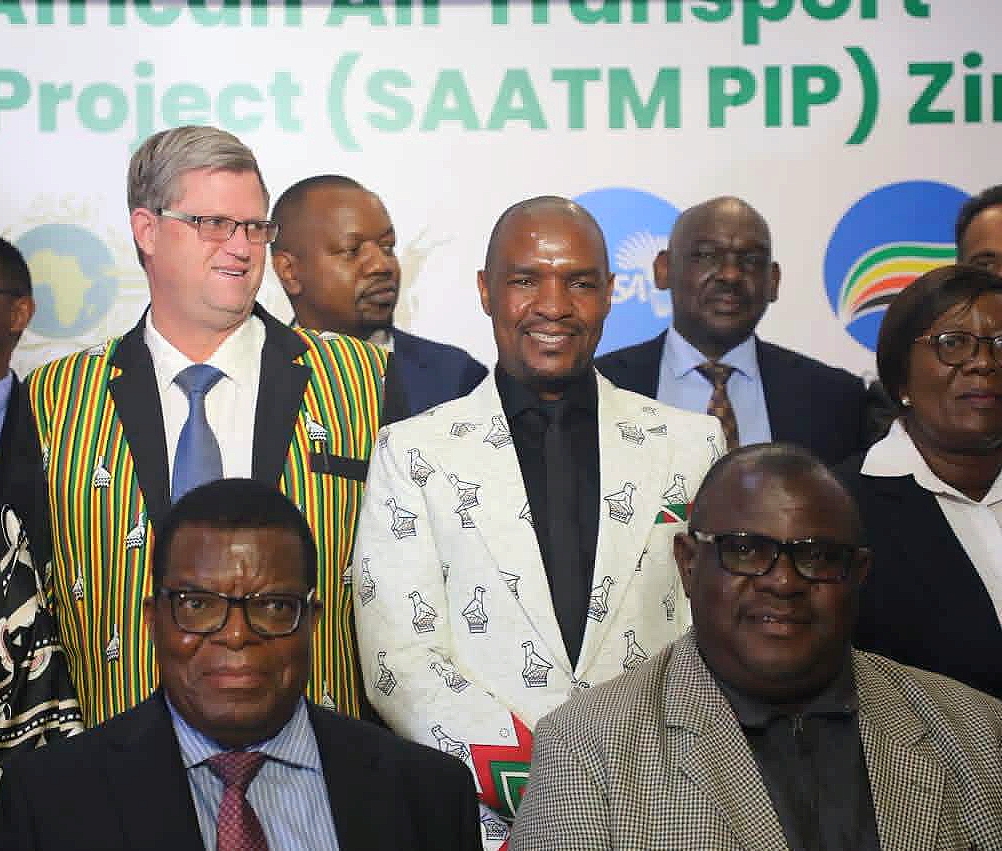
Zimbabwe has renewed its commitment to advancing the Single African Air Transport Market (SAATM), casting aviation as a driving force for deeper regional integration, trade, tourism and economic growth across the continent.
Speaking at the African Civil Aviation Commission (AFCAC) SAATM Pilot Implementation Project Airshow in Harare, Minister of Transport and Infrastructural Development Advocate Felix Tapiwa Mhona argued that Africa can only realise its full economic potential by dismantling the barriers still restricting air connectivity between member states.
Held at Rainbow Towers on 9-10 July, the workshop pushed forward implementation of the Single African Air Transport Market under the theme “Acceleration of Air Transport Liberalisation in Africa to Improve Continental Connectivity and Integration.” The programme centred on turning continental aviation policies into concrete action through regulatory harmonisation, expanded market access and closer collaboration among African states.
Addressing delegates, Mhona called the gathering a significant milestone on Africa’s path toward a seamless air transport network.
He praised AFCAC and its partners for driving reforms aimed at making African aviation more competitive while easing the movement of people, goods and investment across borders.
“This timely initiative, spearheaded by the African Civil Aviation Commission and its partners, demonstrates our collective commitment to promoting greater connectivity, economic growth and regional integration across Africa,” he said.
The minister added that Zimbabwe remains fully committed to implementing the Yamoussoukro Decision, and is reviewing all Bilateral Air Services Agreements (BASAs) with fellow SAATM member states to bring them in line with continental aviation liberalisation goals.
Citing the 2025 SAATM Implementation Report, he pointed out that intra-African air connectivity has climbed from 14.5 percent in 2021 to 23 percent in 2025 a progress that he credited largely to the wider application of Fifth Freedom Traffic Rights, which enable airlines to run more flexible international routes across multiple countries.
According to Mhona, Zimbabwe has paired policy reform with substantial infrastructure investment to build a modern aviation system capable of handling growing passenger and cargo traffic.
He pointed to the ongoing upgrades at Robert Gabriel Mugabe International Airport, Joshua Nkomo International Airport and Victoria Falls International Airport, carried out through Public-Private Partnerships, noting that expansion work at Robert Gabriel Mugabe International Airport alone has lifted annual passenger handling capacity from roughly two million to 6.5 million.
He further noted that Zimbabwe has bolstered aviation safety by installing a Secondary Surveillance Radar System, upgrading Air Traffic Control technology, and rolling out an Aeronautical Message Handling System to speed up the transmission of critical flight information.
Turning to continental cooperation, the minister pressed African countries to do away with protectionist policies and restrictions that continue to hold back the aviation sector’s growth.
“The time has come for us to dismantle the barriers that impede its success, including excessive protectionism, market access restrictions and non-tariff impediments affecting the growth of African aviation,” he said.
The workshop featured technical presentations covering the SAATM Pilot Implementation Project Road Map, Zimbabwe’s own implementation progress, COMESA’s role in aviation liberalisation, airport readiness, sustainable air transport development, the African Continental Free Trade Area (AfCFTA), and the Protocol on the Free Movement of People and Goods. Delegates were also set to adopt a communiqué charting the way forward under the Lomé Declaration.
Industry players welcomed Zimbabwe’s strides toward implementing the open skies initiative.
Fastjet Zimbabwe Corporate Affairs Manager Nunurai Ndawana said the discussions proved that the country’s readiness to meet its SAATM commitments, noting that sustained investment in airport infrastructure is creating a more efficient operating environment for airlines.
Air Zimbabwe engineer Edmund Makona said the national carrier’s planned return to London later this month reflects growing confidence in Zimbabwe’s aviation reforms, adding that the airline’s recovery strategy fits within broader efforts to strengthen regional and international connectivity.
The session closed with a high-level panel discussion on the role of air transport in driving tourism, trade and investment, along with strategies for speeding up SAATM implementation and deepening collaboration among aviation stakeholders. Panellists included Deputy Minister of Transport and Infrastructural Development Joshua Sacco, Zimbabwe Tourism Authority Chief Executive Dr George Manyaya, and officials from the Civil Aviation Authority of Zimbabwe, Air Zimbabwe, the Airports Company of Zimbabwe, immigration and customs authorities, the African Union Commission, and other regional aviation institutions.


