

On the afternoon of 4 July 2026, a walled garden at The Hive on Shortheath Road in Chisipite became the setting for a decade-long secret finally spoken aloud. It was here, between three and six in the evening, that Zimbabwean designer Tatenda Chantelle Chidzidzi presented “Birds of Paradise,” the Resort Collection pre-season viewing for her label “Zanorashe,” a full ten years after she first brought it into being.
“Zanorashe” is more than a label. It is a philosophy stitched into cloth. At its centre sits a mask, the brand’s guiding symbol, representing what Tatenda describes as a “timeless African identity that holds the past, embraces the now, and looks boldly towards the future.” The house calls this ethos “Haute Culture,” insisting that culture is never static, that it is “fluid, reshaped by each generation, each stitch, each story.”
That philosophy runs through the name itself, a fusion of the founder’s creative signature with an African cadence, built to sound at once ancestral and forward-facing. It is a name designed to travel, as fitting whispered in Harare as it is announced on an international stage.
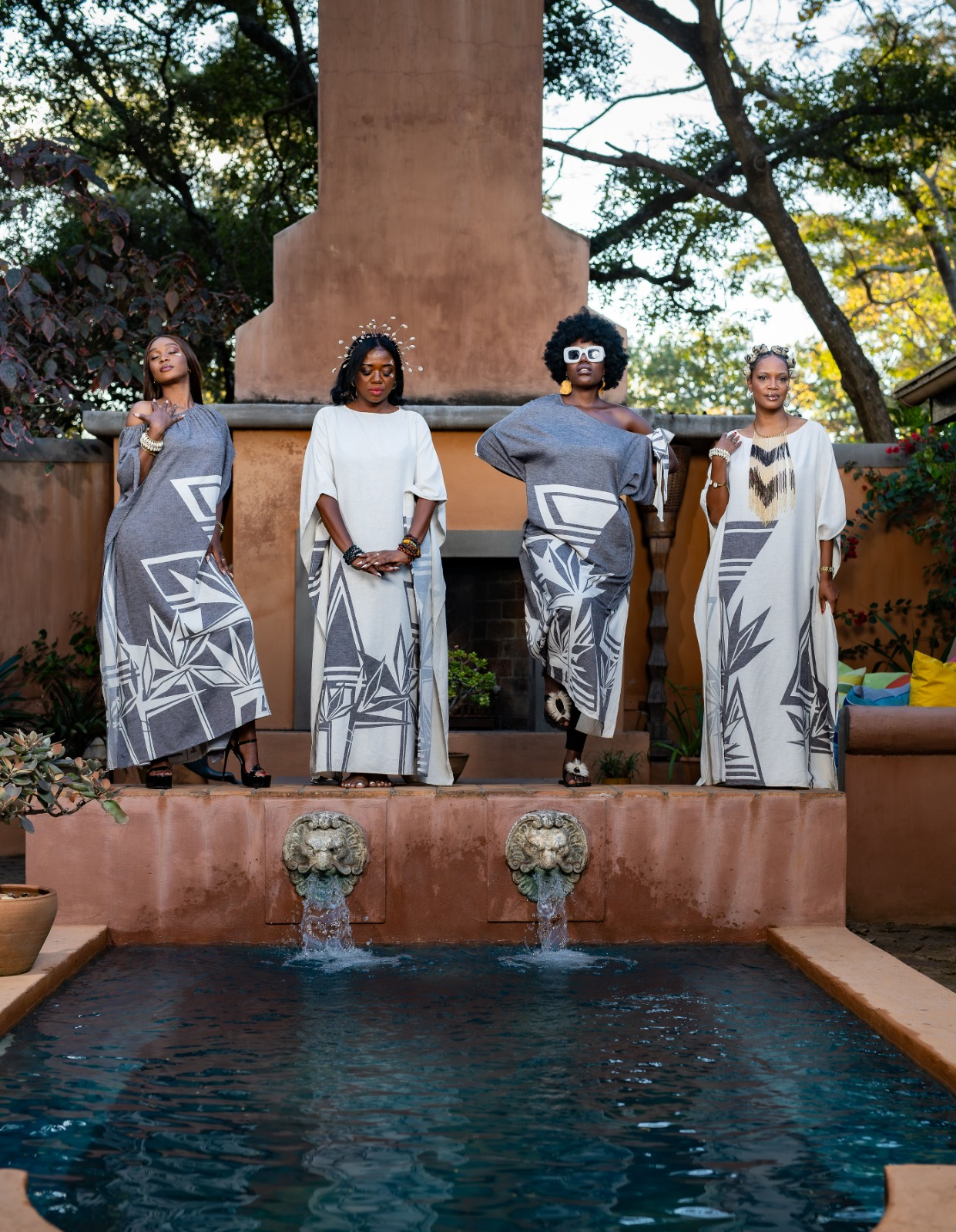
For Tatenda, the evening was an act of courage as much as artistry. “It has been ten years since I created Zanorashe, and in all that time, I have never officially launched the brand,” she told those gathered. “I have never allowed myself to be this vulnerable or to share my work in the way I have today.”
Her path into fashion began at fifteen, ignited by a pivotal conversation with her father. That spark carried her through formal training in Malaysia and on to a master’s degree in Berlin, an education across continents she credits with giving her a design language fluent in more than one cultural tongue. In February 2024, she returned that knowledge to the ground, serving as a facilitator for the Zimbabwe Fashion Week Trust’s Creative Accelerator Programme, mentoring emerging designers in draping techniques rooted in Zimbabwean heritage. Her abiding ambition, to build sustainable, locally anchored fashion using Zimbabwean fabrics and craft, reaches its most complete articulation yet in “Birds of Paradise.”
The collection was brought to life under the curation of Beverley Sekete, founder of “Sankora,” an African cultural intelligence and integrated design practice. In her address, Sekete reframed the occasion entirely, not a showcase, but an act of collective becoming.
“Sankora is about cultural intelligence,” she said. “It is about looking back so that we can bring forward what is valuable and what must never be forgotten.” She invited the room to look beyond the garments and attend to the stone, the architecture, the foliage, the surrounding flora and fauna, and to see each model as “a bird returning home after a long journey.”
Trained in human-centred design, Sekete moves with intention across territories usually held apart, fine art and design, anthropology and curation, research and cultural inquiry. Her staging of “Birds of Paradise” embodied that same sensibility, treating one designer’s authorship with the rigour of an argument, and the creative community around her as something that strengthens the more its members lift each other.
The show’s formal opening was entrusted to the next generation. Tatenda’s daughter, Ayana Nyemba, wrote and performed the poem that introduced the collection, titled “Flight, Fall, Freedom: Reimagining Zimbabwe’s Birds of Paradise.” Reaching for the imagery of the Strelitzia and the soapstone birds of Zimbabwean ancestry, her words cast the work as something that had to endure darkness and pressure before it could emerge. “Out of mud came a creative monument, a breathtaking architecture of survival.” That line became the evening’s closing refrain, its title and its thesis at once. Flight. Fall. Freedom.
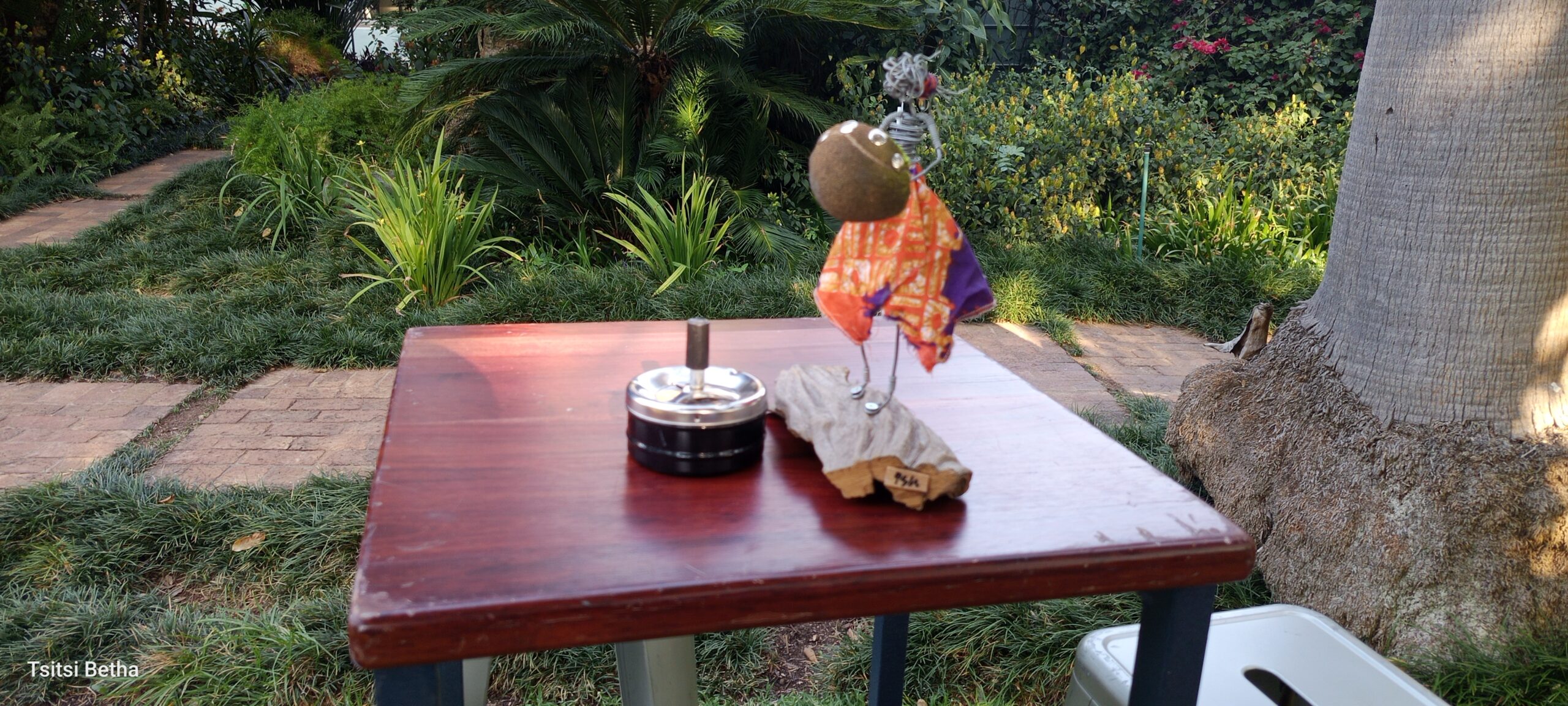
Woven through the presentation were exhibitions of recycled-material works by artist Ishmael Marimirofa, whose practice gives new life to discarded objects as meditations on memory and human dignity. “The aged textures and layered surfaces in my work honour history,” he has written, “and remind us that every object and every person has a story worth preserving.” His contributions introduced a second, quieter register to an event already deeply preoccupied with what endures and what is renewed.
In her closing remarks, Tatenda acknowledged the broad constellation of support behind the collection, a Zimbabwean, British-Swiss, and genuinely intercontinental network encompassing the British Council, the Embassy of Switzerland, Tagive Investments, sound partner The Diplomat Media, and a band that made the journey from Mutare. She singled out House of Stone Showroom, whose founder she called “far more than a friend, a sister,” present in spirit if not in person, having flown to the Democratic Republic of the Congo to oversee the other half of the collection.
“As creatives, I believe the most intimate part of ourselves is our art,” Tatenda said. “It is a vulnerable thing to stand before a room and simply say, ‘Look at me. This is who I am.'”
Those who received the gilded invitation, its bird-of-paradise motif rendered in gold beside a model caught mid-stride, held in their hands something deceptively simple, a confirmation for a pre-season viewing at The Hive, 25 Shortheath Road, Chisipite, Harare. What unfolded inside was considerably more.
As Sekete told the assembled guests before the first model walked, the evening had never only been about clothes. “Beneath everything you see, the true subject is becoming,” she said. “It is about transformation. Every one of you who chose to be here today is part of that journey.”
And, as Tatenda reminded everyone before they slipped into the evening, don’t forget to order a kaftan.


