
BY PAMELA MACHIDHA
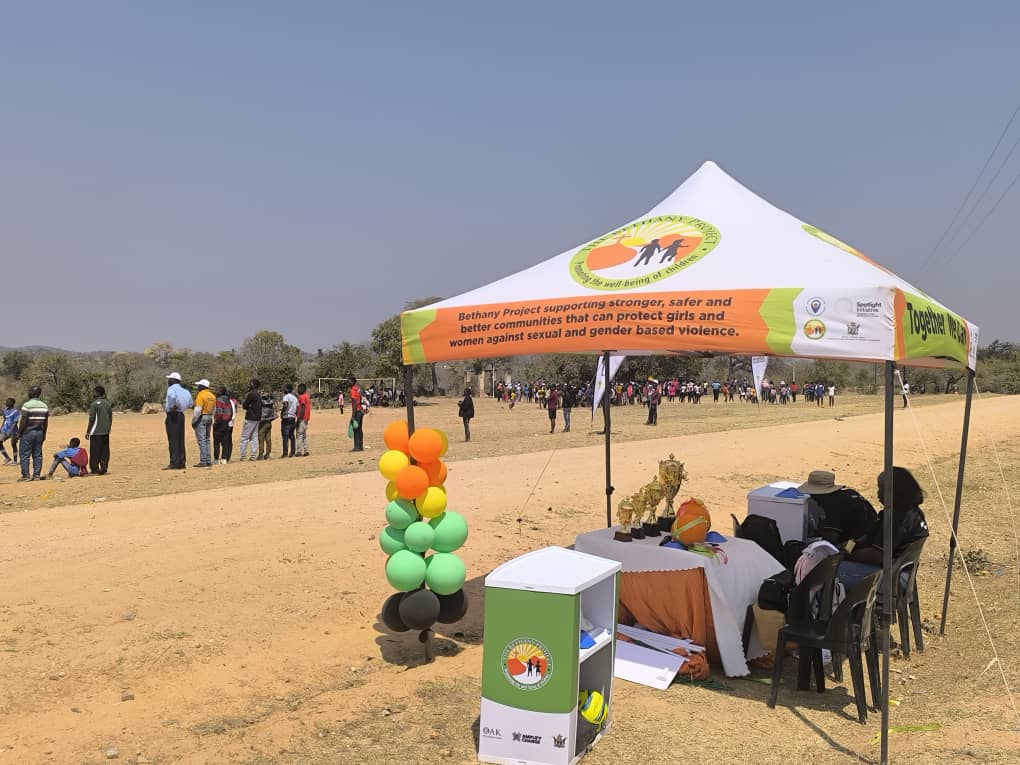
Zimbabwe’s youth are embracing sports as a shield against substance abuse, with initiatives like the SRHR Annual Sports Gala in Mabasa Growth Point. This event, organised by the Bethany Project and funded by AmplifyChange, brought together young people to combat substance abuse and promote healthy lifestyles.
The Gala formed part of a broader initiative titled Equal Access to SRHR Information and Services for Adolescents and Young People, aimed at connecting youth with sport, education, and essential health services.
“We see their potential but also the barriers: limited access to health information, safe spaces, and support systems. This Gala was our way of responding directly to those challenges.”
She emphasized that drug abuse among adolescents is not merely a behavioral issue, but a development crisis.
“Drugs impair judgment. When young people choose to avoid drugs, they are not just making a health decision—they are protecting their future.”
Throughout the event, service providers from the Zimbabwe National Family Planning Council, the Zimbabwe Republic Police’s Victim Friendly Unit and Drug Section, and the Ministry of Health and Child Care manned information desks.
Youth accessed HIV testing, counselling, legal education, and drug awareness sessions—all delivered in a youth-friendly format.
“We did not just talk about the issues. We brought solutions directly to the youth—in a format they could trust and engage with,” Gumbo added.
Law enforcement officials echoed her concerns.
Officers from the Zimbabwe Republic Police Drug Section noted that dagga remains the most frequently recovered substance during rural raids, reflecting a troubling normalization of drug use among adolescents.
Their presence at the Gala was framed not as enforcement, but as partnership.
“Participating in events like this changes the dynamic. It is not just about enforcing the law—it is about helping young people make informed decisions and feel supported,” the officer remarked.
The Zimbabwe Republic Police also highlighted its collaboration with faith-based organizations such as the Anglican Church and ZAOGA ministries, where officers conduct awareness campaigns during youth gatherings.
“Churches have been instrumental. They give us platforms to speak, listen, and reinforce the message in ways that resonate,” the officer noted.
Ward 8 Councillor Stella Mlalazi watched the Gala unfold with conviction.
The sight of young people laughing, competing, and listening was not just heartwarming—it was a rare spark of hope in a district quietly battling the grip of drugs.
“This programme is a blessing. It is helping our youth walk away from drugs and reclaim their future. I just wish it could happen every season because the need is constant,” she expressed.
She praised sport as a powerful entry point—not just for entertainment, but for education.
“I saw teenagers and young adults standing side by side—playing, listening, and learning. This is where they come alive. And when they are alive, they are reachable,” she observed.
For many youth, the Gala was more than a day of games—it was a moment of clarity.
Tichaona, 18, stood by the football pitch, watching his teammates warm up.
“Mutoriro ruins your future. These balls help us stay focused. You cannot chase drugs when you are chasing goals,” he reflected.
For him, sport is protection. “When we play, we forget about broncleer. We think about winning, about teamwork,” he added.
Nearby, Ruth Nyoni, 27, adjusted her netball bib as younger girls gathered around.
Though older than most, she came to learn and to lead.
“We discussed issues people avoid. Now I know how to protect myself and help others,” she shared.
She reflected on sessions covering consent, contraception, and sexually transmitted infection prevention.
“Netball gives us discipline. It keeps us away from drugs like broncleer and reminds us we have value,” Nyoni stated.
The Gala featured spirited competition among four teams—Dambudzo, Mabasa, Hwelezi, and Mapanzure—in both netball and soccer.
While the matches delivered excitement, the real victory lay in what the games represented: unity, discipline, and a drug-free future.
In netball, Mabasa’s girls emerged as champions, earning a full kit of jerseys and a coveted mukombe.
Dambudzo followed with four points and received three balls and a pump.
Mapanzure and Hwelezi, despite finishing third and fourth respectively, walked away with a ball and pump each—proof that participation itself was valued.
On the soccer pitch, Hwelezi boys claimed the top spot, winning a jersey kit and mukombe.
Mapanzure came second with four points, earning three balls and a pump.
Dambudzo secured third place and received two balls and a pump, while Mabasa boys, despite finishing fourth, were awarded a ball and a pump for their effort and spirit.
All teams walked away with equipment—not just as prizes, but as tools of transformation.
Each ball pumped new energy into the fight against drugs.
Each jersey stitched together a sense of belonging. And each trophy reminded the youth that victory is possible—on the field and in life.
While the Gala lit a spark in Mabasa, it also exposed a critical gap: the absence of rehabilitation services in rural communities.
Zimbabwe’s national drug strategy recognizes substance abuse as a development crisis, but for youth in Runde District, access to recovery programs remains out of reach.
Existing facilities like Ngomahuru Hospital in Masvingo or Tariro Rehabilitation Centre in Harare are too far for most rural youth.
Without local options, relapse becomes more likely than recovery.
The Bethany Project has pledged to deepen partnerships with government ministries and civil society to embed sexual and reproductive health and rights and drug prevention into everyday life.
But for lasting change, rehabilitation must be part of the equation.
The SRHR Sports Gala proved that youth are ready to choose their future.
Now, Zimbabwe must give them the tools to rebuild it.


