
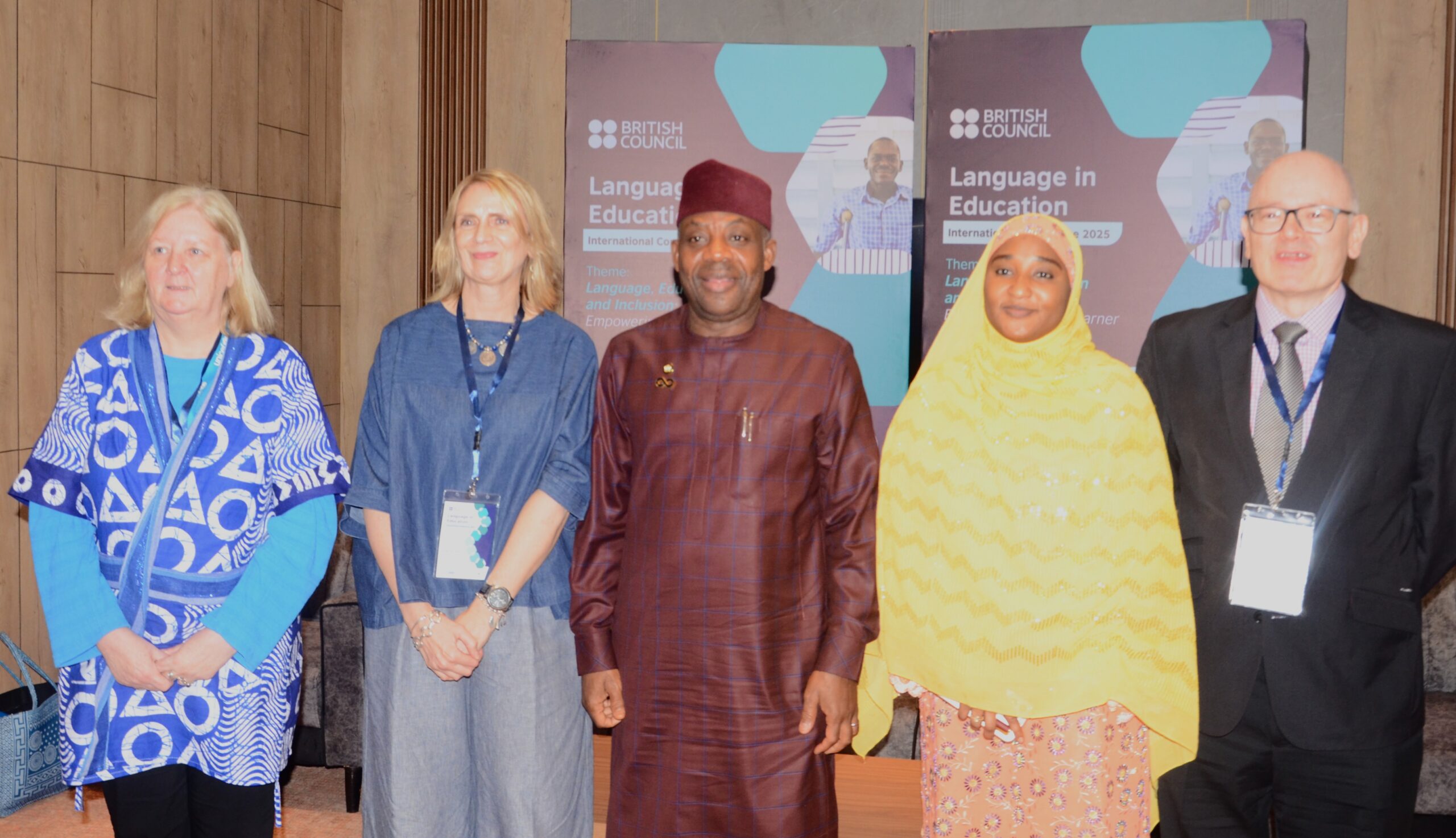
The British Council convened a landmark Language, Education and Inclusion Conference in Abuja in November 2025, bringing together policymakers, educators, researchers and development partners from across Africa, South Asia and the United Kingdom. The gathering focused on a critical question shaping education systems worldwide: how language influences inclusion, equity and learning outcomes.
The conference formed part of an ongoing series of global engagements led by the British Council to address quality and inclusivity in education. Across many participating regions, persistent challenges such as poverty, disability, gender disparities and geographic barriers continue to affect access to education. Within these discussions, language emerged as a key factor determining whether learners can fully participate, understand lessons and remain engaged in the classroom.
A central theme of the conference was the lived experience of learners. Delegates highlighted how teaching in familiar languages can significantly improve comprehension and confidence, particularly among students who might otherwise struggle. When learners connect new concepts to languages they already understand, classroom participation tends to increase, creating more inclusive learning environments.
At the same time, the role of English was widely acknowledged. In many countries represented, English serves as an official language and a gateway to higher education, employment and global engagement. Discussions emphasised that the issue is not whether English should be taught, but how to ensure equitable access to quality English language education for all learners, especially those encountering it primarily in school settings.
Participants also explored diverse international approaches to language use in education. Some systems adopt English as the primary medium of instruction from early years, while others introduce it later or combine it with local languages spoken at home. A shared understanding emerged that there is no universal model; education systems must adapt language policies to their unique social, cultural and economic contexts.
The conference benefited from a wide range of perspectives, with contributions from West, East and Southern Africa, as well as South Asia and the UK. Despite differences in education structures and language policies, common challenges surfaced. These included strengthening foundational learning, managing transitions between different levels of schooling and equipping teachers to handle linguistically diverse classrooms.
Practical classroom strategies were also a focal point. Educators shared methods such as using familiar stories and local examples to introduce new concepts, encouraging group work to enhance participation, and incorporating visual aids and locally available materials to support understanding. These approaches demonstrated how inclusive practices can be implemented within existing national frameworks.
From a policy perspective, delegates agreed that language should be treated as a strategic issue rather than a purely technical one. Decisions about language in education impact curriculum design, teacher training, assessment and resource development. Governments underscored the importance of grounding such decisions in both research and practical experience.
The Abuja conference is expected to inform future programming, research and resource development by the British Council and its partners. As follow-up initiatives take shape, including peer learning and targeted teacher support, the ultimate goal remains clear: to improve classroom experiences and learning outcomes for all students.
While the conference marked an important milestone, participants agreed it is only the beginning of a longer journey. Its success will ultimately be measured not in policy discussions, but in classrooms—where learners gain the confidence, understanding and opportunity to thrive through inclusive, language-aware education systems.
Language and Inclusion Take Centre Stage at Global Education Conference
143

previous post

