
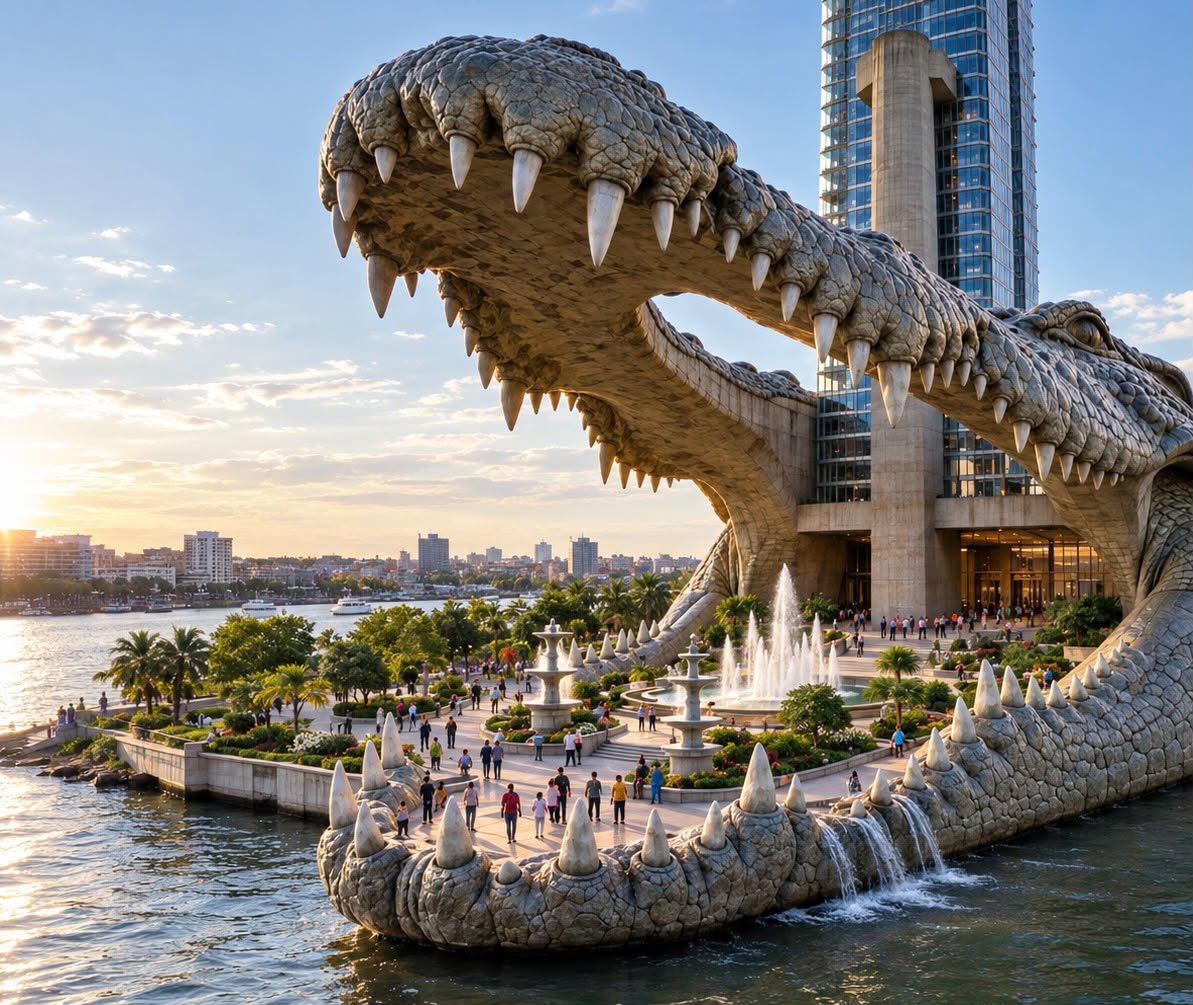
A young Zimbabwean architectural designer has proposed an ambitious crocodile-inspired tower for Kariba or Victoria Falls, envisioning a landmark that could combine tourism, hospitality, cultural heritage and international conferencing in a uniquely Zimbabwean architectural statement.
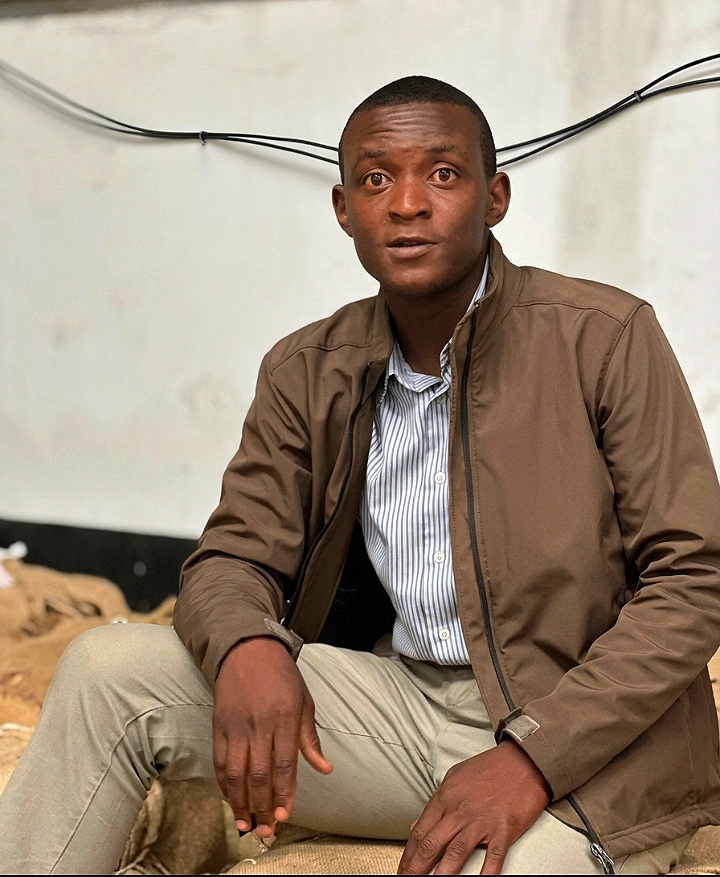
Dubbed the Garwe Tower, the concept by Harare-based junior architect and architectural designer Mufaro S Zhou draws inspiration from the crocodile, a powerful symbol associated with President Emmerson Mnangagwa, and seeks to translate the animal’s distinctive features into a modern, multifunctional structure.
Although the proposal remains a concept, it presents an opportunity to explore how home-grown architectural innovation could contribute to Zimbabwe’s tourism development and create a distinctive attraction for international visitors.
The proposed tower would incorporate scale-inspired exterior panels designed to provide shade and improve energy efficiency, while the crocodile’s jaws would inform the main entrance and skybridge. Its ridged back and dorsal fins would form the building’s structural spine, creating a striking silhouette intended to stand out against the landscape.
Inside, the development would feature a luxury hotel, restaurants, a 360-degree viewing deck, an international conference centre, a crocodile cultural museum and a presidential legacy library documenting modern Zimbabwe’s history.
The proposed locations, Kariba and Victoria Falls, offer different but complementary tourism opportunities. Kariba is renowned for its lake, wildlife and water-based leisure activities, while Victoria Falls is internationally recognised for its spectacular waterfall and adventure tourism experiences.
A landmark of this scale, if found feasible and successfully developed, could broaden the attractions available at either destination, encouraging longer stays and creating opportunities for hospitality businesses, tour operators, cultural enterprises and other tourism service providers.
Zhou envisages the tower becoming an internationally recognised architectural attraction, drawing comparisons with iconic buildings that have helped shape the identities of major tourism destinations around the world.
However, the project’s potential contribution to visitor numbers would depend on factors including its location, accessibility, investment requirements, marketing strategy and integration with existing tourism products. The designer’s projection that the tower could triple tourist arrivals has not been independently established.
Beyond its visual appeal, the concept places emphasis on employment creation, with Zhou projecting more than 5,000 jobs during the development and operation of the project. These could potentially span construction, engineering, fabrication, hospitality, tourism services and cultural programming, although the estimate would require a detailed feasibility assessment.
The proposal also envisages using Zimbabwean companies to manufacture construction components, including steel, glass and the scale-inspired façade panels, creating potential opportunities for local suppliers and technical skills development.
Environmental considerations feature prominently in the concept. Zhou proposes allocating a portion of the tower’s revenue towards crocodile conservation and protection of the Zambezi River ecosystem, with the Zimbabwe Parks and Wildlife Management Authority (ZimParks) identified as a potential beneficiary.
Such an arrangement would require formal agreements, environmental safeguards and a sustainable funding framework to ensure that tourism development supports rather than undermines the ecosystems on which wildlife-based tourism depends.
The designer says his interest in architecture began at the age of nine, when he started drawing buildings and imagining what he could create. He credits the country’s emphasis on investment and development under the Second Republic with encouraging him to pursue his ambitions at home.
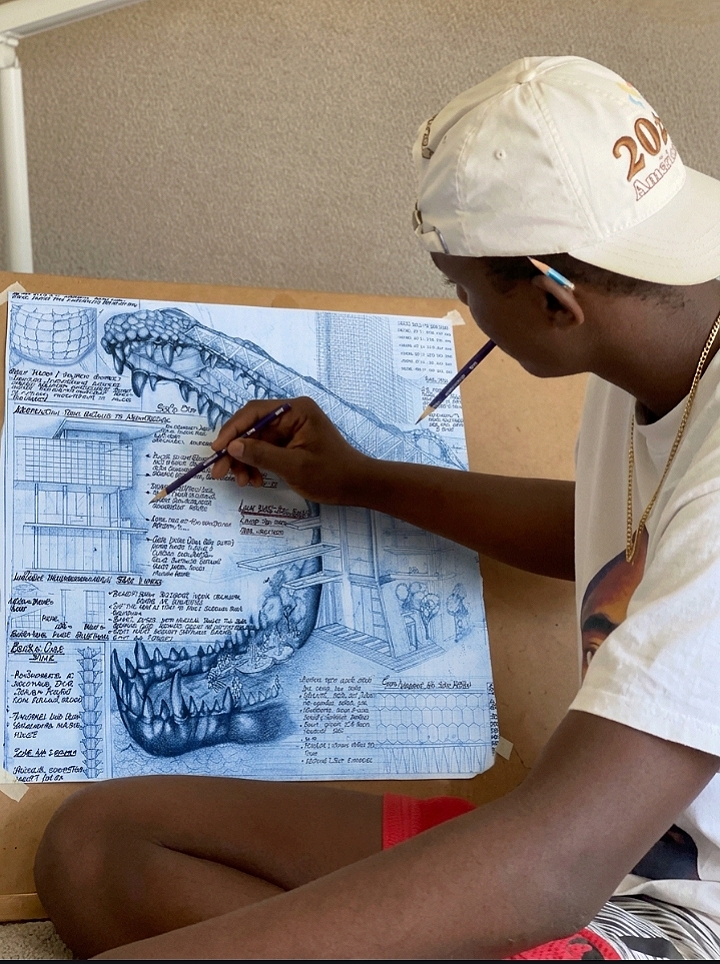
He also acknowledged the Minister of Youth Empowerment, Development and Vocational Training, Tinotenda Machakaire, for efforts to recognise and support young people’s talents.
Zhou is now presenting the concept to the Office of the President and Cabinet, the Ministry of Tourism and Hospitality Industry, ZimParks, the Ministry of Youth Empowerment, Development and Vocational Training, and prospective Zimbabwean investors for consideration.
For the proposal to progress beyond the drawing board, it would require professional architectural and engineering reviews, environmental and heritage assessments, site selection, cost estimates, planning approvals and a viable investment model.
If these requirements can be addressed, the Garwe Tower concept could provide a starting point for discussions on how Zimbabwean creativity and locally inspired design might contribute to tourism infrastructure, destination branding and economic opportunities.
For now, the tower remains a vision rather than an approved or funded development, but it places an important idea on the table: Zimbabwe’s tourism future can also be imagined and designed by its own young people.


