
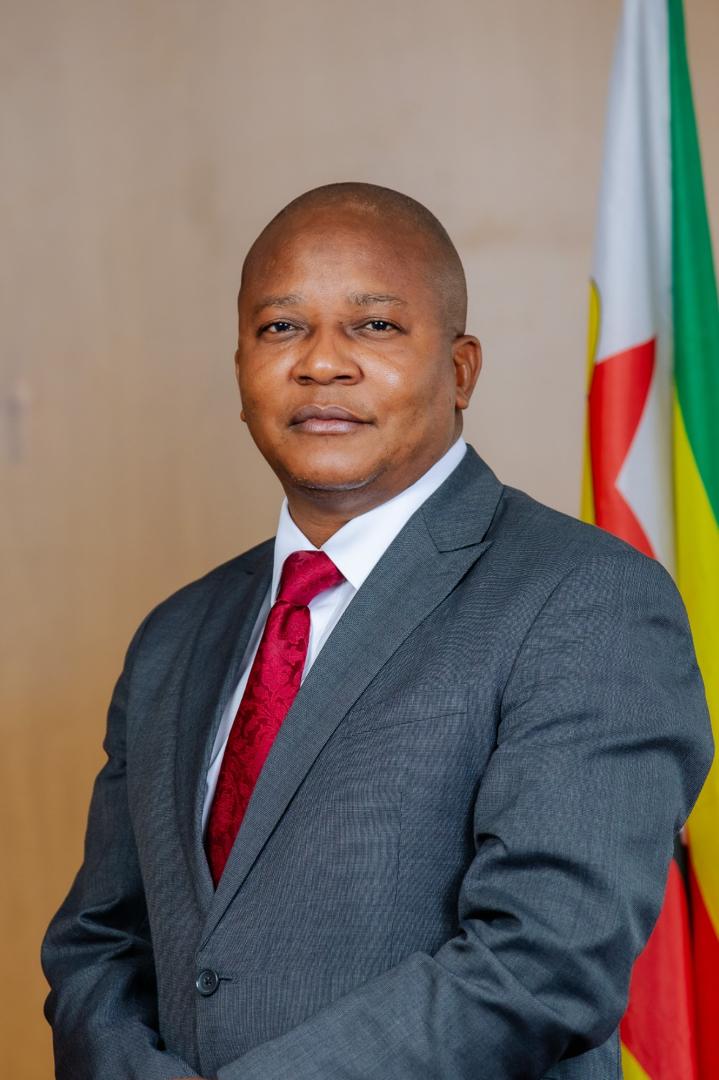
Zimbabwe must develop environmental, social and governance (ESG) frameworks that reflect its own economic realities instead of adopting metrics designed for highly industrialized economies, ENM Advisory Group’s Mr Edwell Maposa has said.
Speaking at the inaugural National ESG Conference at the Rainbow Towers in Harare, Mr Maposa said Zimbabwean companies risked failing to achieve meaningful sustainability if they continued applying ESG prescriptions that were not suited to the country’s level of economic and institutional development.
A lawyer by training, Mr Maposa said ESG was not a new concept in Zimbabwe, arguing that many of the practices associated with environmental protection, social responsibility and good governance had long been part of everyday life and business operations.
“ESG is not a new thing to us here in Zimbabwe. We have been doing these things. It’s just a technical construct that has been brought to us,” he said.
He warned against corporates rushing to produce ESG reports simply to satisfy perceived international expectations, saying this could result in green-washing rather than genuine sustainability.
“I have seen corporates panicking, trying to put out reports, and in the process green-washing,” he said.
According to Mr Maposa, one of the central problems facing Zimbabwean institutions is not resistance to ESG, but the adoption of metrics that are difficult to implement within the country’s economic and institutional environment.
“Most of our entities are failing, not because we don’t want to undertake ESG frameworks, but we have been taught wrongly. We have been given the wrong prescription,” he said.
He argued that Zimbabwe needed to identify its own ESG “missing reality” and develop indicators that accurately measure the country’s environmental, social and governance priorities.
“Let’s not be forced by the Western world to adopt matrices that are for the well-developed world. We have our own matrices, which are foundational to where we are, to where our industries are,” he said.
Mr Maposa said highly industrialized economies operate within sophisticated regulatory and economic systems that cannot simply be replicated in developing countries without considering differences in institutional capacity and economic conditions.
He compared the situation to a race in which developed economies had already advanced significantly while developing countries were still building the foundations required for sustainable growth.
“You can’t have the same matrices as those in the Western world, because you are bound to fail. The risk becomes high,” he said.
Instead, he called for ESG milestones that are realistic, measurable and capable of supporting Zimbabwe’s transition towards a more mature and sustainable economy.
“True sustainability does not penalize a developing economy for its realities,” he said. “It helps a developing economy by actually making it real as it transits into a mature, holistic shape.”
His remarks come as Zimbabwe faces increasing pressure to improve ESG reporting, particularly in sectors such as mining and agriculture that are central to the country’s economic development and international trade.
Earlier presentations at the conference highlighted significant gaps between Zimbabwe’s current ESG disclosures and international expectations, with researchers putting overall disclosure at about 46 percent of international expectations in areas assessed.
The research also found that while some listed companies demonstrated more advanced disclosure practices, the broader national ESG reporting framework remained underdeveloped, with weaknesses in verifiable data, assurance, reporting structures, climate strategies and supply-chain information.
Mr Maposa said the answer was not to abandon ESG, but to ensure that the framework was properly contextualized.
He welcomed calls by Government ministers for companies and institutions to demonstrate evidence of measurable change, saying ESG should ultimately be reflected in the realities of people’s lives and the performance of the economy.
The call is consistent with the wider objective of the conference, which seeks to move Zimbabwe’s ESG debate away from broad corporate statements towards evidence, measurable outcomes and practical implementation.
For Zimbabwe, Mr Maposa said, the challenge was therefore to create an ESG system that could satisfy legitimate international expectations while remaining relevant and achievable within the country’s own economic and social context.
The result, he argued, should be an ESG framework that strengthens rather than undermines local institutions, businesses and industries as Zimbabwe works towards sustainable economic development.


