
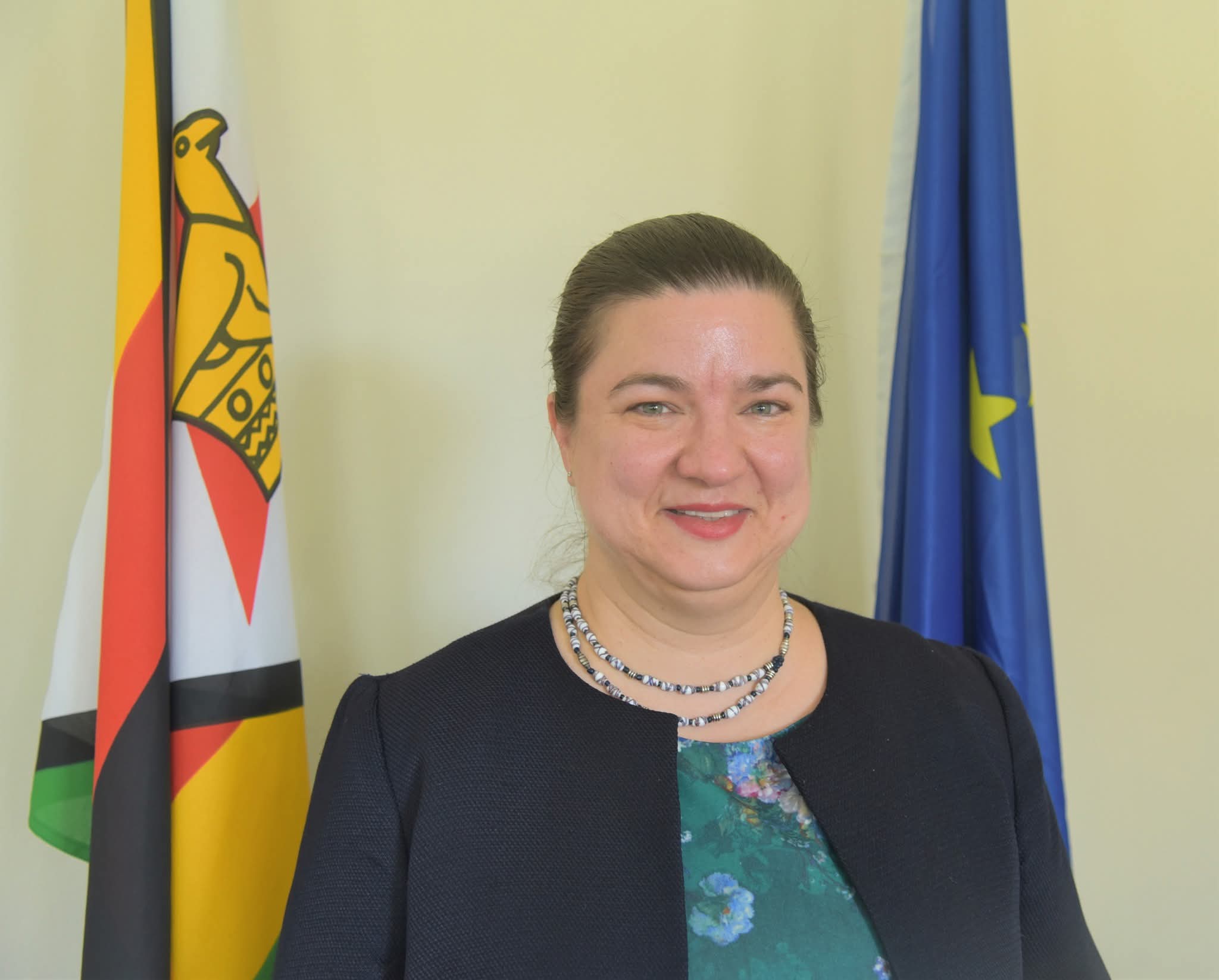
Tributes have been pouring in for Katrin Hagemann, the European Union’s Ambassador to Zimbabwe, whose sudden death this week cut short a posting that had barely lasted a year but left a visible mark on the country’s diplomatic and civic life.
Diplomats, government officials and civil society figures who worked with Hagemann described her as a diplomat who moved fast and spoke plainly. Within weeks of arriving in Harare in September 2025 she was already signalling her intention to get out of the capital and engage Zimbabweans directly, a promise those close to her say she largely kept.
Her public record backs that reputation. She positioned the EU as what she repeatedly called a steadfast and predictable partner, pressing Zimbabwe’s case for faster progress on arrears clearance and debt restructuring while pushing local businesses to make more of the EU’s duty-free, quota-free market access. She was candid about the gap between potential and performance, pointing out that barely 200 Zimbabwean firms were exporting to the bloc and framing better governance as the missing ingredient for growth.
That candour extended to harder subjects. She spoke out in February about the narrowing of civic space in Zimbabwe, and in July told an anti-corruption summit hosted by Transparency International Zimbabwe that good intentions on paper meant little without institutions built to enforce them.
Those who encountered her outside formal settings describe her as someone who took a genuine interest in the Zimbabwean culture. She spoke enthusiastically about local artists at the launch of the 2026 EU-Zimbabwe calendar, and surprised guests at this year’s Europe Day celebrations by taking the stage to play the mbira alongside musician Mary Anibal, having taken up the instrument only recently.
Her path into diplomacy was unconventional. She trained first as a scientist, earning a Master of Science in astronomy from Cornell University, before retraining in international affairs at the Diplomatic Academy of Vienna. She went on to serve in EU delegations in Botswana and Kenya, and led the Central Africa division at the European External Action Service in Brussels, before her appointment to Zimbabwe.
The EU Delegation has opened a Book of Condolences at its Harare offices, running from Monday 7 September to Thursday 10 September, open daily from 10:00 to 16:00, for members of the public wishing to pay their respects.


