
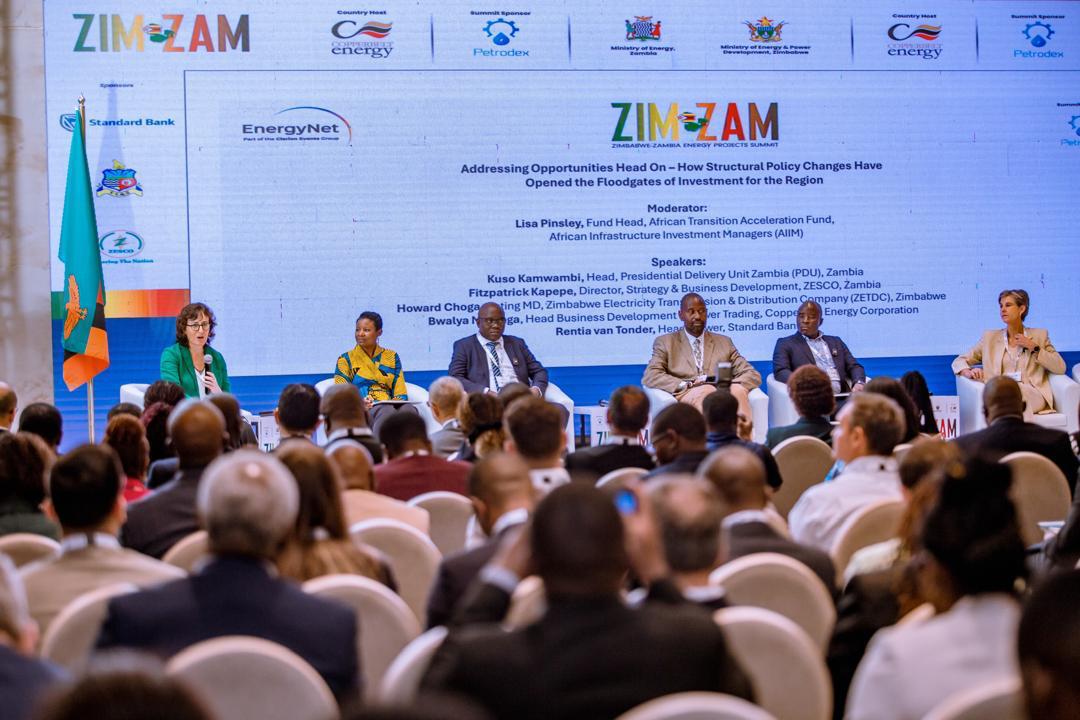
Zimbabwe and Zambia are set to advance regional energy investment, cross-border electricity infrastructure and private-sector participation when the third Zimbabwe-Zambia Energy Projects Summit convenes in Livingstone from November 3 to 5.
The summit, organised by EnergyNet, will be held at the Radisson Blu Mosi-Oa-Tunya under the theme, “Celebrating How Zambia and Zimbabwe Have Unlocked FDI Through Connectivity, Credibility and Cooperation.”
The meeting comes as both countries seek to expand electricity generation, strengthen transmission networks and mobilise financing for projects supporting mining, manufacturing and broader industrial development.
Since the inaugural summit in 2024, growing demand for reliable electricity has contributed to increased private-sector involvement and new investment opportunities across the two markets.
Copperbelt Energy Corporation has financed the second phase of its Itimpi project through a green bond programme on local capital markets, while First Quantum Minerals is working with independent power producers to supply its Zambian mining operations.
In Zimbabwe, ZESA Holdings has reported that 635 megawatts (MW) of privately generated electricity capacity is under construction, with a further 730MW progressing towards financial close.
The developments are expected to inform discussions on translating investment commitments and regulatory reforms into operational energy infrastructure.
According to EnergyNet, the Livingstone meeting will focus on generation projects serving mining and industrial consumers, transmission infrastructure, cross-border interconnectors and electricity trading through the Southern African Power Pool (SAPP).
Projects expected to feature in the discussions include Lumwana Super Pit, the Kansanshi S3 expansion, Chisamba Solar and Kariba Floating Solar, alongside presentations outlining project pipelines in Zambia and Zimbabwe.
The summit will bring together government officials, utilities, investors, financiers and independent power producers to examine financing structures and partnerships capable of advancing projects towards construction.
Zimbabwe’s Minister of Energy and Power Development, July Moyo, will join Zambia’s Minister of Green Economy and Environment, Dr Gilbert Siame, among the senior officials leading the discussions.
Other participants include Mulele Mulele, Permanent Secretary for Economic Management and Finance in Zambia’s Ministry of Finance and National Planning; Arnold Simwamba, Permanent Secretary for Electricity in Zambia’s Ministry of Energy; and Cornwell Muleya, chief executive officer of Zambia’s Industrial Development Corporation.
ZESA Holdings Group chief executive Cletus Nyachowe and Simbarashe Pasipamire, electricity market analyst at SAPP, are also expected to contribute to discussions on regional electricity markets and infrastructure development.
Private-sector and investment participants include Omar Jabri, head of business development for Africa at the Private Infrastructure Development Group; Jason De Carteret, chief executive officer of Solarcentury Africa; Monie Captan, deputy chief executive officer for West Africa at Petrodex; and Sipho Phiri, chairman of Kwama Energy and executive chairman of Western Power Company.
EnergyNet Group Deputy Director for Africa Abdoulaye Sylla said the two countries had reached a critical stage in their energy development, with diversification and regulatory reforms creating opportunities for investment.
“ The urgent need to diversify away from climate-vulnerable hydro towards solar and hybrid solutions, combined with bold regulatory reforms in open access, wheeling and private sector participation, has positioned both countries as compelling investment destinations,” Sylla said.
He said the priority was to convert the momentum into tangible projects by attracting foreign direct investment, reducing risks associated with independent power producer frameworks and accelerating the development of commercially viable projects and cross-border infrastructure.
“The opportunity is clear, but the priority now must be delivery,” he said.
Regional integration is also expected to feature prominently, particularly as countries seek to improve electricity supply by sharing generation resources and strengthening interconnected power systems.
Standard Bank Corporate and Investment Banking head of project finance in energy and infrastructure Sherrill Byrne said coordinated electricity markets and stronger transmission networks could improve energy security while attracting long-term investment.
“By aligning regulation, planning and infrastructure development, we can accelerate the delivery of reliable, affordable and cleaner power to support inclusive economic growth,” Byrne said.
Byrne said the summit continued to provide a platform for public- and private-sector stakeholders to coordinate their approaches to infrastructure development and regional economic growth.
Bowmans partner Aleem Tharani said growing regional interconnection and investor-friendly regulatory environments were helping translate energy-sector reforms into investment opportunities.
“Across the region, projects are reaching financial close, lenders are backing new offtake models and private capital is moving into transmission and trading,” Tharani said.
He added that the summit brought together governments, utilities, financiers and developers involved in advancing these transactions.
The event’s sponsorship structure reflects participation from companies operating across the energy and financial sectors. Copperbelt Energy Corporation is the country host, while Petrodex is the summit sponsor. Bowmans and Standard Bank are lead sponsors, Soleos is a sponsor, and Metmin and Modaso Energy are associate sponsors.
Beyond individual projects, the summit is expected to examine how financing arrangements, regulatory coordination and regional electricity trading can support the delivery of generation and transmission infrastructure.
For Zimbabwe and Zambia, the challenge is to ensure that growing industrial demand, renewable-energy opportunities and reforms supporting private investment translate into dependable electricity supplies and projects capable of reaching financial close and construction.
The November gathering will therefore provide a platform for both countries to assess progress since 2024 and identify practical steps towards expanding electricity generation, improving regional connectivity and attracting further investment into Southern Africa’s energy sector.


