
The World Bank has advised Zimbabwe that it accelerates structural reforms to unlock private investment, expand productive industries and convert recent macroeconomic stability into sustainable growth and employment,
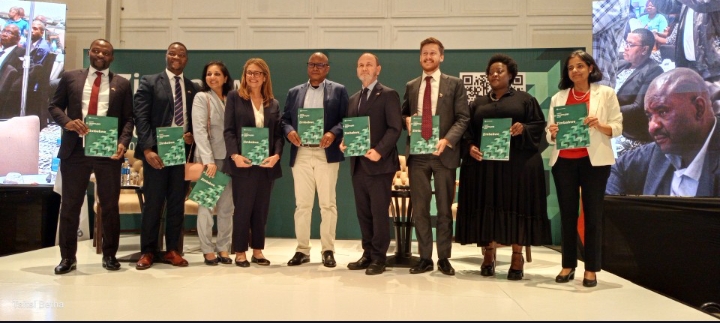
Launching the Zimbabwe Growth and Jobs Report in Harare on Friday, World Bank Senior Country Economist Victor Steenbergen said the country had reached an important economic turning point following years of instability.
The report notes that Zimbabwe’s economy grew by an average of almost six percent between 2021 and 2025, while local-currency inflation fell to single digits in early 2026 for the first time since 1997.
However, the World Bank warned that these gains would not automatically translate into higher living standards unless Zimbabwe undertakes deeper structural reforms.
“Zimbabwe is growing without transforming,” the report states, pointing to the movement of workers from agriculture into predominantly low-productivity informal services rather than higher-value industries.
Four in five jobs remain informal, while median wages are estimated at only US$130 a month and nearly half of the population remains below the international poverty line.
The report projects that without accelerated reforms, economic growth will average around four percent through 2030, leaving Zimbabwe on course to attain upper-middle-income status in 2036 — six years later than the country’s Vision 2030 target.
The World Bank has consequently proposed a reform programme built around macroeconomic stability and debt sustainability, supported by three key pillars: foundational infrastructure, a business-enabling regulatory environment, and the mobilisation and de-risking of private investment.
Infrastructure is identified as an immediate priority, particularly reliable energy, transport networks, irrigation and agricultural market infrastructure.
The report argues that improved infrastructure would not only support industrial activity but also reduce the operating costs that constrain companies from expanding and hiring.
Debt resolution is also considered critical, with the World Bank saying that clearing arrears would help restore access to concessional financing and reduce Zimbabwe’s country risk premium.
The third pillar focuses on creating greater confidence for investors through stronger property rights, land tenure, commercial justice, deeper financial markets and improved access to finance for micro, small and medium enterprises.
The report also calls for reforms to Zimbabwe’s foreign direct investment framework to attract international capital into productive sectors.
Closing the launch, Head of the Debt Management Office in the Ministry of Finance, Economic Development and Investment Promotion Andrew Bvumbe said the Government was aware that stability had to produce tangible economic benefits.
“At the end of the day, we don’t need stability. Stability must translate into transformation,” Bvumbe said.
He urged stakeholders to focus on sectors capable of generating productive employment, particularly for young people and women.
Bvumbe pointed to agriculture and value addition as areas with significant potential, citing cotton as one example where Zimbabwe could extract greater value by developing the entire production chain.
He also highlighted mining and mineral beneficiation, renewable energy, manufacturing, construction and healthcare as potential sources of employment and investment.
For Bvumbe, the challenge was not simply economic growth but the quality of employment generated by that growth.
“Yes, we have grown, but with the growth has not been [enough]. And I think the jobs have failed. I also think that is the biggest question we have,” he said.
He also called for continued improvements to the business environment, welcoming Government efforts to eliminate unnecessary levies, licences and regulatory requirements.
Bvumbe said that reducing the cost of doing business would strengthen collaboration between Government and the private sector and encourage greater investment and production.
The report’s recommendations come as Zimbabwe seeks to leverage its natural resources, human capital and recent policy reform momentum to accelerate development.
The World Bank said the country possessed the foundations needed for transformation but warned that the current window of opportunity was not guaranteed to remain open.
Full implementation of the proposed reforms, it said, could significantly accelerate growth, generate more and better-paid jobs and place Zimbabwe on a credible path towards achieving upper-middle-income status by 2030.
For Zimbabwe’s development partners and investors, the report presents a clear message: macroeconomic stability is creating the opportunity, but structural reform and private investment will determine whether that opportunity becomes sustained economic transformation.


