
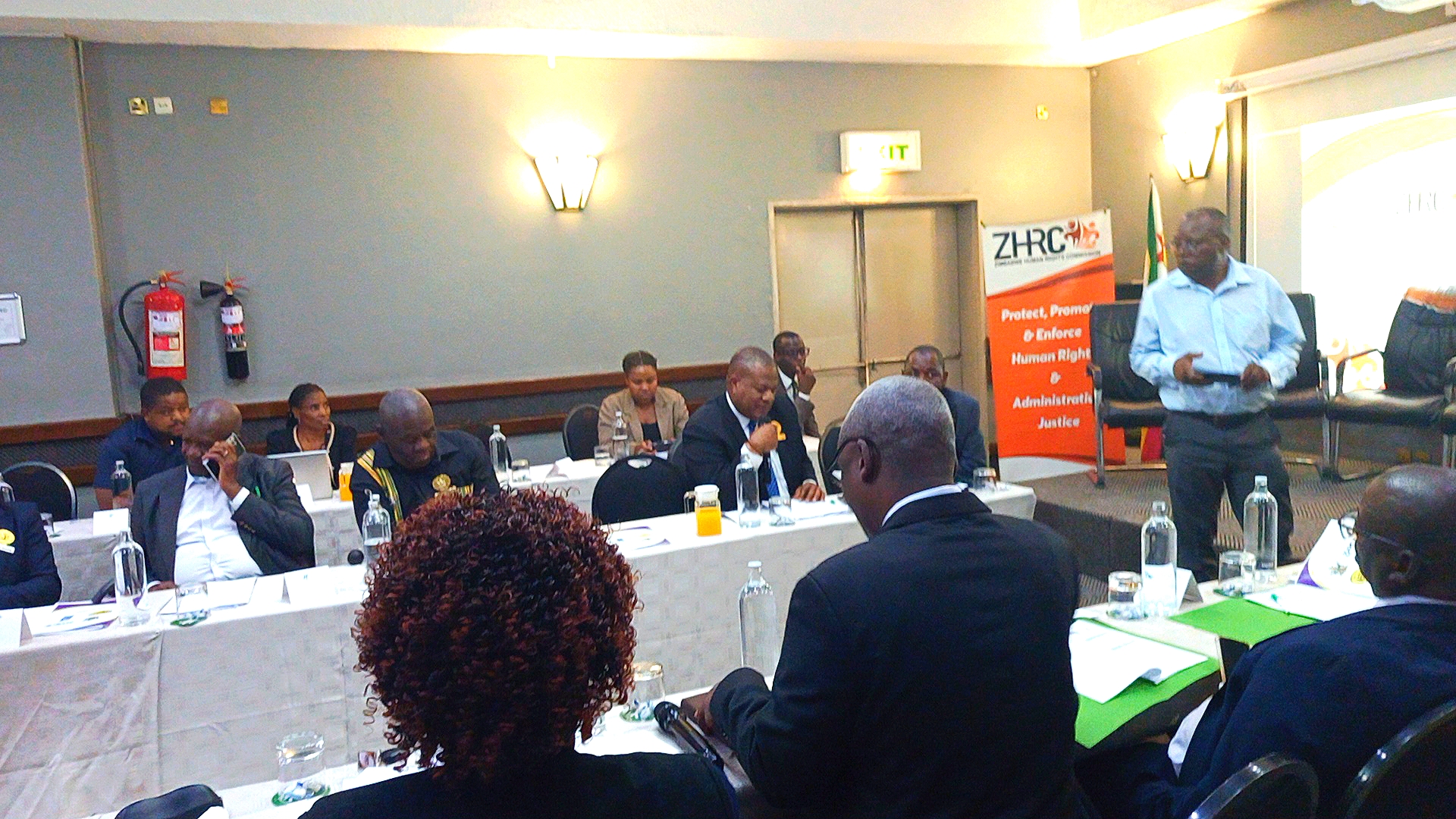
Zimbabwe Human Rights Commission (ZHRC) chairperson Mr Anele Ndebele and the Ministry of Justice, Legal and Parliamentary Affairs have thrown their weight behind efforts to protect intersex persons, urging traditional leaders to help end the stigma and misconceptions that leave many excluded from their families and communities.
The call came on Thursday, 29 October, at the Traditional Chiefs Sensitisation Dialogue on the Rights and Recognition of Intersex Persons in Zimbabwe, held at Holiday Inn in Harare. The ZHRC convened the meeting with the Ministry and the intersex community, with contributions from the United Nations Development Programme.
Opening the dialogue, Ndebele told the room that, as custodians of customs, traditions and community values, they hold profound influence over social attitudes, human dignity and the fair treatment of every community member.
“Our traditions and our constitution need not be presented as opposing forces,” he said. Pausing to stress the point, he noted that as a lawyer, teacher, journalist and lay preacher he enjoyed the poetic licence of underlining what mattered, then repeated the line.
Intersex persons, Ndebele explained, are born with sex characteristics that do not fit typical medical definitions of male or female bodies. This was a biological reality, he stressed, not a sexual orientation. Misconceptions had often left them misunderstood, stigmatised or excluded, with consequences for their dignity, access to documentation and enjoyment of fundamental rights.
He recalled that the Commission had tackled these challenges through its national inquiry on access to documentation and later advocacy work, and welcomed the Government’s ongoing research, consultations and consideration of legal and policy reforms.
Talks on recognition, including an appropriate gender marker on official documents, must proceed with care, openness and mutual respect, he cautioned. The gathering was not meant to pre-empt Government decisions, but to deepen understanding, hear the experiences of intersex persons and contribute to processes already underway.
“Ultimately, this is not a call to abandon our culture. It is a call to ensure that our cultural values continue to serve their highest purpose: preserving human dignity, strengthening social cohesion and leaving no one behind,” Ndebele said.
Chiefs, he added, can help dispel misconceptions, encourage compassion and guide communities towards practices that are fair, humane and inclusive.
Representing the Ministry of Justice, Legal and Parliamentary Affairs, Mr Gova walked participants through the international, regional and national legal and policy frameworks on the rights of intersex persons. He underlined the need to turn international standards into domestic law and policy, and called for public education and professional training to counter stigma and discrimination.
Gova outlined the daily hurdles intersex persons face, from using toilets and attending school to seeking healthcare and accessing other facilities built around conventional male and female categories. Employment is also difficult, he observed, particularly when official records or educational certificates do not reflect a person’s circumstances. He pointed to Zimbabwe’s participation in the Universal Periodic Review process and the commitments made under it.
ZHRC Deputy Executive Secretary for Programmes Mr V.E. Mukutiri set out three objectives for the dialogue: sensitising chiefs and other duty bearers on intersex characteristics, lived experiences and human rights concerns; addressing misconceptions, stigma and misinformation; and establishing community entry points for further sensitisation, especially in hard-to-reach areas.
“Misinformation is one of the major enemies that we have in dealing with this issue,” Mukutiri warned. He urged participants to ensure that whatever is shared about intersex persons is accurate and factual, and looked to traditional leaders to steer the wider sensitisation effort.
Dr Norman Marara presented on the bodily autonomy of intersex persons.
Three intersex-led organisations took part in the the Intersex Community of Zimbabwe (ICoZ), led by Kudakwashe Murisa; the Intersex Community Zimbabwe Trust (ICZT), represented by Tsitsi Ndabambi; and the Intersex Advocate Trust (IAZ), represented by Malume Ngwenya. Murisa, the keynote speaker from Zimbabwe Lawyers for Human Rights (ZLHR), also addressed the dialogue.
During a panel discussion, Ndabambi and Ngwenya shared the lived realities of intersex organisations in Zimbabwe and the challenges they face in their work.
The discussions underscored the value of working with traditional leaders as community partners, so that intersex persons are accepted and supported while the national conversation on legal recognition continues.


