
PAMELA MACHIDHA
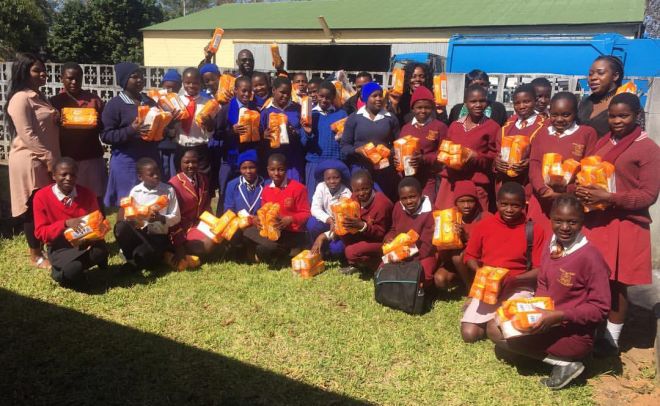
Girls in Zimbabwe’s rural areas face immense challenges in accessing menstrual health products. Lack of proper livelihoods coupled with devastating effects of the drought have left families struggling to put food on the table, let alone menstrual pads. Girls in Chief Negove’s area in Mberengwa are not spared either, they cannot manage their periods with dignity and comfort.
In an interview with the Diplomat, Primrose Nyangoni, the senior woman at Murerezi high school in the district, and founder of the Differently Abled Initiative Foundation (DAI) explained how lack of safe and hygienic sanitation facilities compounds shame and stigma for girls when they menstruate.
“Lack of access to sanitary products and proper sanitation not only causes embarrassment but also puts girls’ health at risk. They are forced to use cow dung, piece of blouses and newspapers to manage their periods.
” Unavailability of menstrual hygiene products has far-reaching consequences that go beyond the educational sphere. ln addition to the fear of judgment from peers, girls are facing social isolation, shame and loss of self-confidence. This stigma is deeply entrenched and even young girls in primary school face the challenges,” explained Nyangoni.
She said the problem is even worse in situations where girls are raised by a single father, they find it difficult to ask for money to buy sanitary pads, “The situation is even more challenging for the girls who are being raised by single fathers who may have limited understanding of the physical and emotional challenges of menstruation.”
She emphasized that the cost of pads is just one part of the equation for rural girls with disabilities.
“For rural girls with disabilities, the cost of menstrual hygiene products can be a significant financial burden especially when combined with the cost of medication and other health care needs”.
Nyangoni noted that the cost of sanitary pads is significantly higher in rural areas than in urban areas, where a packet of 10 sanitary pads costs 50cents or 60cents in urban areas while in rural areas the same pack costs $1.
“The economic hardship of rural families is further exacerbated by high cost of sanitary pads which are often marked up significantly by retailers in order to make a profit.”
“For families with five grown up daughters, the cost of pads alone can be as much as $15 per month, per child. This is especially difficult for families who are already struggling to make ends meet due to economic hardship and crop failure. ”
She narrated how her organization reached out local businesses and organizations who can sponsor initiatives to improve the lives of rural schoolgirls.
“We have reached out to local businesses, banks and mining companies in an attempt to find sponsorship but so far our efforts have been unsuccessful. They may not be fully aware of the gravity situation, she said”.
Nyangoni expressed gratitude to the Ministry of Primary and Secondary Education for including menstrual hygiene products in the school budget.
“The Ministry of Primary’s and Secondary Education’s proposal to include hygiene products in school budgets is a positive step, however in the case of Murerezi high school the families are struggling to pay schools fees which is preventing girls from accessing much-needed menstrual hygiene products “.
“In order to better support rural schoolgirls, the government could consider creating resource centres in each school, in each ward, equipped with sewing machines, materials for making reusable pads. These centres would be staffed by community members with experience in making reusable pads which can be sold at an affordable price.”
“Additionally, girl-friendly toilets would be a valuable to these centres, allowing girls to stay clean and confident during their menstrual cycles. Parent- teacher meetings could be an opportunity for senior women or female to break down some stigma and misconceptions around menstruation, she said”
Photo Credit: Rabison Shumba’s The Pad Shopper campaign initiative.


