
SHELMA SIBANDA
United Nations Development Programme (UNDP), Resident Representative to Zimbabwe, Dr Ayodele Odusola has highlighted the potential of agriculture as a springboard for development in Africa.
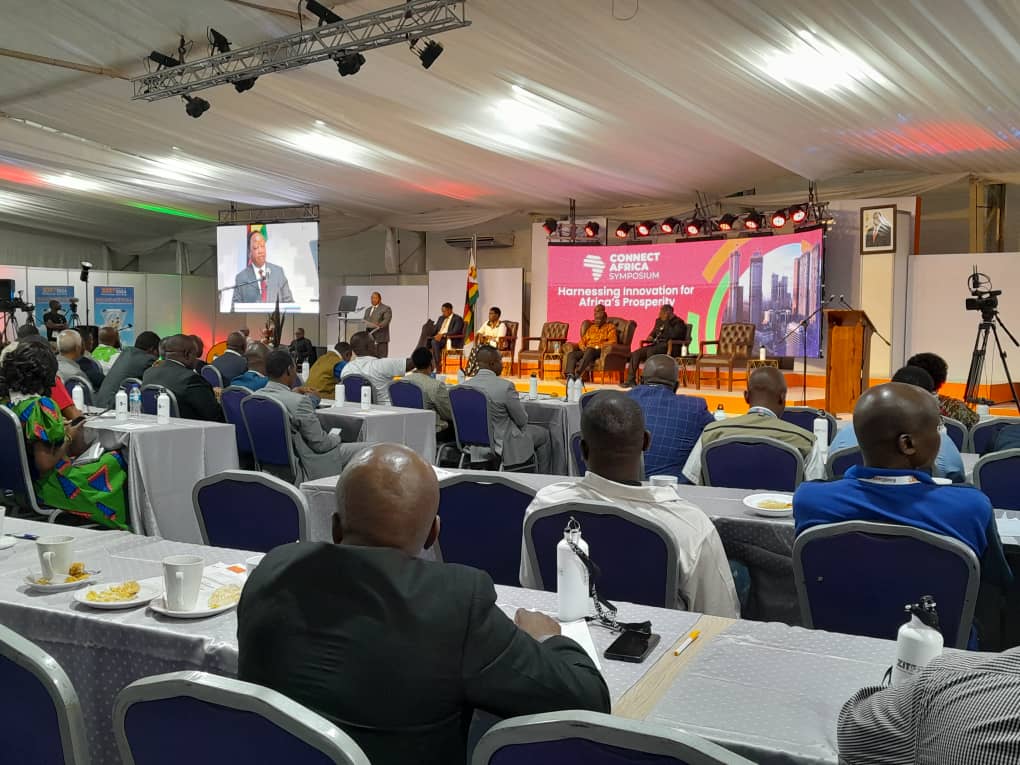
While presenting on the topic ‘Revitalising African Agriculture as a Tool for Inclusive Development Through Innovation at Africa Symposium held at the Zimbabwe International Trade Fair recently, Dr Odusola emphasised the importance of product diversification in low-income countries, stating that they can use agriculture to produce a wide range of agricultural products based on their geographical and climatic zones.
He said, “And the opportunity is there for all types of countries in Africa to use it as a springboard of their development in so many ways, the low-income countries can use it to promote what you call product diversification. So that we are able to produce even agricultural products based on the geographical and climatic zones we have.”
He pointed out that leveraging the opportunity of agro processing is crucial for middle-income countries as well. By enhancing agricultural productivity, Dr Odusola argued that the dignity of people can be improved, prosperity can be promoted, and the planet can be protected.
“Through agricultural productivity, and enhancement, we can enhance the dignity of people. We can promote prosperity and also protect the planet,” stated Dr Odusola.
To support his claims, Dr Odusola referred to a comparative analysis conducted on eleven different countries across Africa, four in Asia, and three in Latin America. He highlighted the profound lessons learned from this analysis, stating that increasing the productivity of small-scale farmers is key to agricultural transformation.
Additionally, he emphasised the importance of ensuring that farmers are fully integrated into national, regional, and global markets.
He said, “And also, it is really very, very important to ensure that farmers are fully integrated into the national, regional and global markets.”
Dr Odusola discussed Africa’s comparative advantages in agriculture, including the fact that the continent hosts 60% of all utilized arable land in the world. However, only 12% of Africa’s arable land is effectively utilized, which is paradoxical considering the high levels of poverty and hunger in the region. He also mentioned Africa’s natural resources, such as the presence of the longest river in the world and the second largest river in terms of water volume, as well as the largest man-made lake with fresh water.
Addressing external challenges, Dr Odusola noted that the share of agriculture in Africa’s GDP is an indication that the sector is underperforming, as more transformed agriculture tends to contribute less to GDP. He also highlighted the disproportionate share of labour in agriculture compared to the total labour force in the country, stating that in Africa, it ranges from 60% to 90%.
Furthermore, Dr Odusola criticized Africa’s dependence on importing food that can be produced locally, citing that the continent spends 62% of its foreign exchange, amounting to $78.1 billion annually, on food imports. He argued that this is a waste of resources that could be used to promote local food production.
Dr Odusola stressed the need for transformative initiatives in agriculture and identified four critical areas for development: adoption of technology, including research, development and irrigation; improvement of small-scale farmers’ capacity and capability; productivity enhancement through technological advancements like precision agriculture; and the promotion of climate-smart agriculture.
Presenting at the same symposium, the Country Director for CARE Zimbabwe, Patrick Sikana underscored the urgent need for increased investment in agriculture, particularly in research, innovation, and development.
He lamented the stark contrast between Africa’s current allocation of less than 1% of investments in agriculture and the four to 5% invested by countries in the West.
“How on earth are we going to revitalise agriculture without adequate investments in research and development?” he questioned.
The Country Director called for a shift in perception, asserting that agriculture must be seen as a viable business opportunity. He stressed the importance of incentivizing agriculture through reinvestment, quoting Albert Einstein’s famous words, “Compounding is the eighth wonder of the world.”
Sikana also highlighted the critical role of infrastructure in rural areas, including reliable power supply and improved access to ensure that processing facilities are located closer to production points. He advocated for the establishment of cold chains and strategic storage facilities to minimise losses.
“We need to invest in infrastructure, not only power, electricity, but also as I said earlier, access so that this will attract processing closer to the points of production. And that way our farmers and our producers don’t have to incur huge expenses taking their products to places of market. We need that way we will attract cold chains,” stated Sikana.
He further said, “How can we put our cold chains in Marondera where electricity is unreliable? How can we establish strategic storage in my village where the nearest place to access electricity is five kilometres away? We need to take rural investment in infrastructure seriously.”
By prioritising the mentioned areas and adopting transformative measures, African nations can drive inclusive development, improve livelihoods, and ensure sustainable food production for the benefit of all.


