


RICHARD SHUMBA
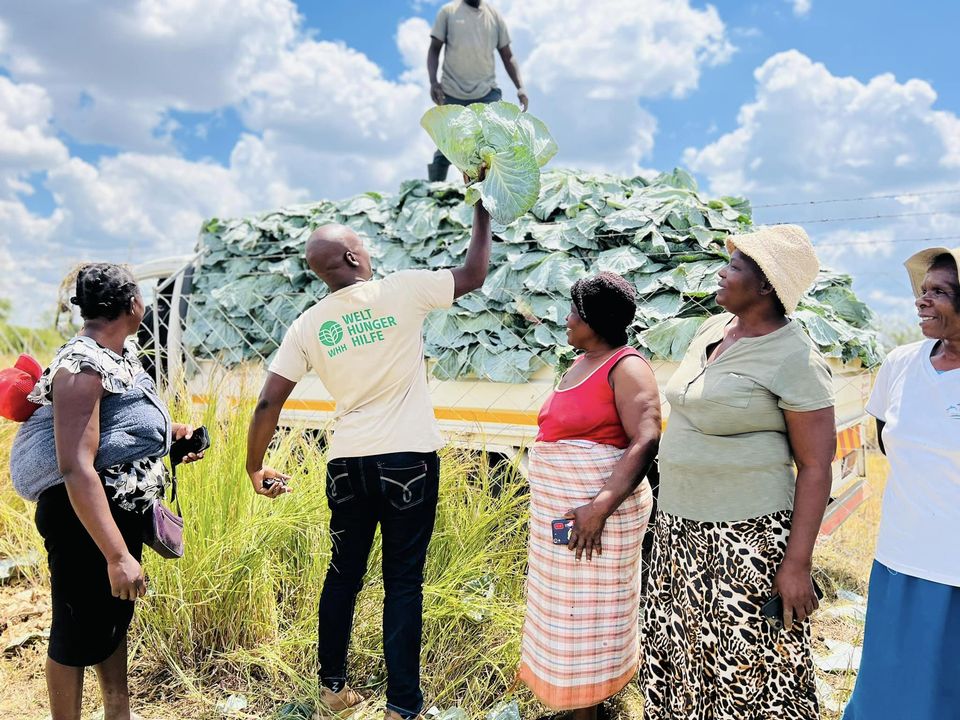
As El Nino induced drought patterns continue to affect crop production in the midlands province, women in agriculture through the urban social protection and resilience building project which is being implemented by WeltHungerHilfe (WHH), have embarked on the production of cash crops to sustain their livelihoods.
The project being implemented at the Go beer farm in Gweru is aimed at promoting urban agriculture for food security and sustainable livelihoods, it focuses on promoting the cultivation of cash crops among farmers in the urban area.
The impact of this urban resilience project extends beyond the core beneficiaries empowering other community members.
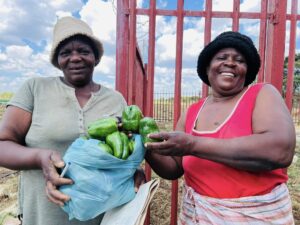
Beneficiary of the project, Petronela Muzonyei who struggled to put food on the table prior to the project, expressed her gratitude, “All the cabbages we had, have already been sold out and for maize we used cs727 which is drought resistant and efficient during times like these where we are facing El Nino effects, but we are grateful from the advice we got from, WHH and their experts because had it not been for their efforts I could be still wandering in the streets aimlessly,” she said.
Another beneficiary 16-year-old Progress Bhebhe said the initiative had empowered her as a young woman to gain sufficient knowledge to be able to penetrate the market force.
“It has been four years now since I started the rabbit project and ever since I started working with WHH I have managed to attract a lot of customers through the skills they taught us as well as providing us with inputs which has improved our livelihoods,” she said.
As low-income earners struggling to make ends meet their lives were transformed when they received an unforgettable opportunity from WHH.
This newfound knowledge coupled with their sheer determination bore fruit on the once barren land and began to yield an astounding abundance of nutritious crops.
WeltHungerHilfe an organization renowned for its commitment to fighting global hunger is reaping the rewards of its investment in the lives of formerly downtrodden individuals.
Their dedication to ensuring food security and empowering low-income earners has set a shining example for other organizations and individuals striving to make a lasting impact.
WHH project head Munyaradzi Moyo said the project was aimed at improving the livelihoods of smallholder farmers in the area, especially women.
“The most vulnerable people have been hit hard In the streets and the idea was to kind of start with an emergence response program to at least have these people to survive and the idea generated that we should now support the same clients in building a stronger resilience in their life and in this regard we decided it only needs a little push and a little investment to develop the potential and we came here in Gweru in 10 different value chains where we offered training where we offered capacity building in order to create market linkages for them to sustain their livelihoods ,what we see here is one component of 6 households brought together looking after this agricultural land and I think to get this land was possible due to a super collaboration between city council and different actors in the field,’’ he said.
Moyo also expressed concern over the effects of climate change and the need to put in preventive measures that see a zero tolerance to hunger.
“Being a farmer is one of the most challenging jobs you can have at the same time probably one of the most important ones because we all depend on the efforts of the farmers. Challenges are manifold we are in climate change phase , we have water scarcity ,we have land issues I think productivity could be improved as but I think they is a lot of hope at the horizon as well because a lot of problems are going on looking particularly into productivity the connection of relevant sectors to improve the environment of farmers we are working hard to provide better access to information to develop channels of excellence and we need to develop the agriculture sector as a business because at the end it is a business and farmers have to compete on a very competitive market to include them into value train developments,” he said
Moyo also emphasized that adopting various agricultural mechanisms would help address challenges farmers are facing especially climate change.
“Climate change is with us and it’s something we have to deal with initially there were water points that were staggered so we were looking into utilizing hosepipes and we also thought of the labour saving technologies in terms of the drip irrigation which comes with water retention capacity given that we have higher temperatures so we are also trying to run away from inorganic fertilizers and utilize the cow dung fertilizers,” he said.
Participating farmers where being assisted with seed packages production and marketing knowledge as well as business literacy to take small holder farming as a viable business.