


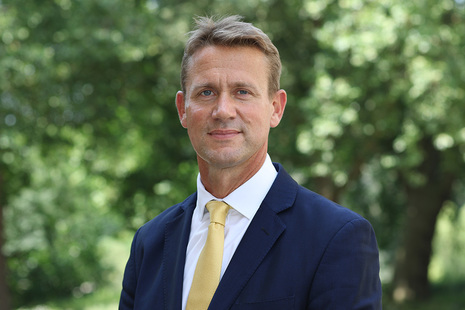
In this instalment of Diplomat Interface, we bring you lifestyle excerpts from the conversation the British Ambassador to Zimbabwe, Peter Vowles had with netzines on #AnAudienceWith a platform presented by Mike Tashaya. The wide-ranging interview also touched on trade, immigration, international relations, science and technology and below are excerpts of the interview.
Question: Thank you so much for gracing our space and we are humbled to have you as our guest. Surely, with your status and agreeing to do this is humbling. I have a number of questions for you our esteemed guest and some are personal and some professional. First where did you grow up?
Answer: I was born in Oxford and spend the first nine years of my life in the United States and France. My father was a salesman for a US tractor company. Then we moved and settled just outside Ipswich in the East of the UK. I went to school in Ipswich.
When I finished school, I came to Zimbabwe where I taught in a rural school in Mudzi. I went back to the UK and started university, but to be honest, I realised that I wasn’t much of an academic and I wanted to come back to Zimbabwe. I raised money to come back and worked in Guruve for a summer. Back at university, I was restless and spent most of my time figuring out how to come back to Zim. Finally, I got a job in Murewa so, I quit university (much to the disappointment of my friends and parents!) and rented a house in the growth point with a view of Hurungwe Mountain. I spent the next four years in Zimbabwe before returning to the UK in 1999.
Returning to the UK, I decided that I wanted to continue working on international issues, but that I needed to improve my skills, so I joined the NHS Management Training Scheme, a two-year practical leadership training programme alongside doing a Master’s Degree. And from there – after many failed applications – I finally got a trainee role with the World Bank health team, then with a private health consultancy programme and finally joined Government in 2006.
Since then, I’ve lived and worked in DRC, Kenya, Afghanistan, India, Bangladesh and Myanmar. But to answer your question, I never thought I’d be an ambassador. But I did know I would find a way to come back to Zimbabwe!
Q: Could you share with us some of the most memorable experiences from your time teaching in rural Mudzi and working on community projects in Guruve and Murewa? How did these experiences shape your perspective on Zimbabwe?
A: Professionally, my time in Zimbabwe was life-changing for me. Living in rural communities I got to see – for a short time and obviously from a position of privilege – the world from a different perspective. I saw and felt how services were delivered whether in the school or our local clinic; I understood first hand transport challenges; the challenge of working in the evening with no electricity; I understood the impact of the 1992 drought etc. These experiences really shaped my subsequent career in development, and I hope have given me a different perspective. On a more personal note, I loved being invited by the vakuru (elders) to join them sitting in a circle under a tree to share a bucket of Chibuku, to join the community for a plate of sadza and nyama (meat) and playing slug (mini-soccer) after work with my colleagues. I could go on…
Q: Besides ‘haifiridzi’ which other Zimbabwean food/drink do you enjoy?
A: I genuinely enjoy a simple plate of sadza nyama with muriwo (vegetables). Though I find it harder to do in Harare, I love stopping off en route somewhere for nyama goch goch. I had some fantastic mazondo in Mutoko not so long ago. I haven’t had any recently but remember loving meals with dovi (peanut butter). And I enjoyed the sadza rezviyo I made for the #highfiridzi challenge too.
In terms of drinks, I feel like I grew up drinking Mazoe! The borehole at the school was quite brackish and mazoe was essential to ensure I got enough liquid in the hot Mudzi months. Controversially, only orange flavour though (handidi kunwa cream soda, peach etc!). I like Zimbabwean clear beers – Castle by choice and I enjoyed the experience of drinking opaque beer (chibuku) enough to start enjoying it!
I’ve also recently been enjoying some of the newer drinks available in Harare – Happy Culture’s cucumber and mint Kombucha is particularly good (healthy but expensive!)
Q: What kind of music do you listen to?
A: I have always listened to Zimbabwean music ever since I was first here, listening to Leonard Zhakata, Leonard Dembo, Simon Chimbetu, Andy Brown, Thomas Mapfumo and of course Oliver Mtukudzi
I used to listen to them on the bus to Nyamapanda, at the bottle store and at friends’ houses/ homesteads powered off a car battery. I used to see Tuku live in Harare and occasionally at Murewa Hotel. When I left Zimbabwe, I left with all of them on tape and subjected friends across the world (from Kabul to Dhaka to Edinburgh).
I loved seeing Mapfumo and Tuku in London (but found it odd that we had to sit down to “watch” them at the Barbican). Zim music is for dancing.
Of course, I’ve other music interests – but the bulk of what I listen to is Zimbabwean or Congolese. I spent three years in Kinshasa and loved rumba, soukous, ndombolo and kwasa kwasa. Bob Marley, Horace Andy and Jonny Clark also feature a fair amount.
I am afraid I haven’t really got into Amapiano or Zimdancehall. But I did go to Rusape (Vengere Stadium) earlier this year to see Jah Prayzah, Sugar Sugar and Alick Macheso. Was great fun but I had to leave before Macheso came on, so I am looking forward to seeing him – hopefully when he is playing Mutoko next!
But showing my age, Leonard Zvakata’s Mugove, Batai Mazwi and, of course, Hupenyu Mutoro are the best. I love the lyrics, the moral messages and dancing! I recall many bottle store evenings with these as our soundtrack.
Full interview on https://www.facebook.com/share/p/rRLSPVge2C2e9Vvt/?mibextid=oFDknk
[…] and industry leaders to strengthen the country’s creative and cultural industries. Hosted by the British Council Zimbabwe in collaboration with the Embassy of Switzerland and the Swiss Development Agency for Cooperation, […]