


Irrigation Seen as Key to Masvingo Growth
Masvingo Province is being positioned as a strategic driver of Zimbabwe’s long-term food security and agro-industrial growth, with government officials calling for large-scale, coordinated investment in irrigation, mechanisation and value addition to unlock the region’s full agricultural potential.
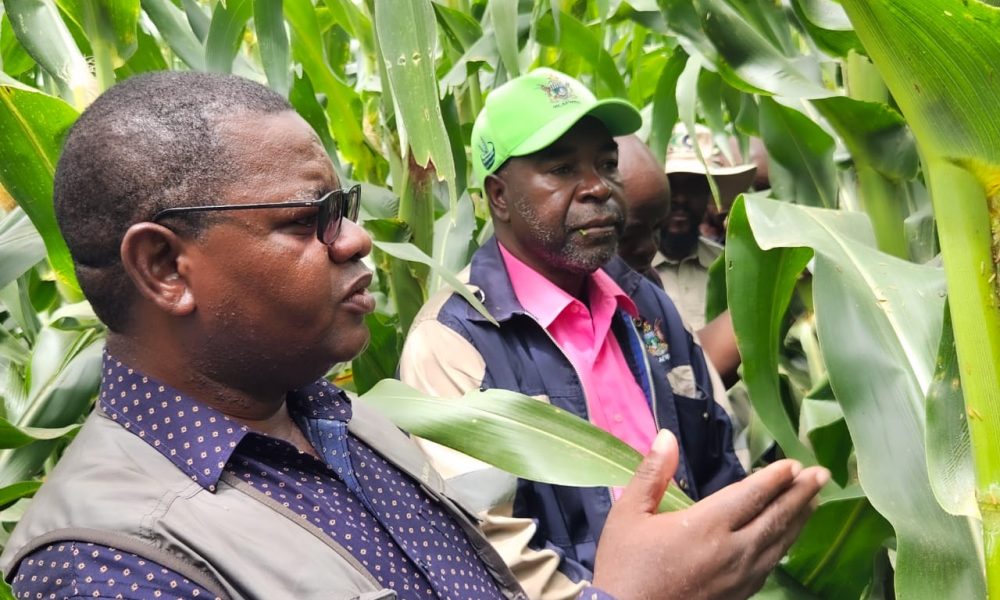
Permanent Secretary for Lands, Agriculture, Fisheries, Water and Rural Development, Professor Obert Jiri, said Masvingo holds a unique advantage due to its extensive water resources, which, if fully harnessed, could transform the province into the country’s leading cereal producer. He made the remarks during an assessment of the ongoing summer cropping season at Riverton Farm, owned by Mr Phillimon Mutangiri, where 200 hectares of maize are projected to yield an impressive 10 tonnes per hectare.
Professor Jiri said the visit demonstrated what is possible when water availability, planning and modern farming practices are aligned. He noted that Masvingo has long been associated with small grains because of its semi-arid conditions, but stressed that irrigation can fundamentally change the province’s production profile.
“Masvingo has 52 percent of the nation’s water, and that water must be converted into production,” he said. “If we can fully put this water to agricultural use, Masvingo should become the hub of our national food security.”
He emphasized that irrigation development must now be treated as a strategic priority rather than an optional intervention. According to Professor Jiri, climate variability and recurring droughts have made reliance on rain-fed agriculture increasingly risky, underscoring the need for resilient, water-driven production systems.
Beyond boosting yields, the Permanent Secretary said agricultural growth in Masvingo must be anchored on value addition and agro-processing in line with Vision 2030 and the National Development Strategy 2 (NDS-2). He challenged farmers and investors to ensure that produce leaves farms as finished or semi-finished products rather than raw commodities.
“We must not allow raw materials to leave the farm,” he said. “Wheat must leave as flour or bread, maize as mealie meal, and milk and meat as processed products like yoghurt or cheese. That is how we grow incomes, create jobs and build strong rural economies.”
Professor Jiri also urged farmers to embrace mechanisation and modern technologies, saying traditional tools and outdated methods limit productivity and competitiveness. He said efficient, technology-driven agriculture is essential if Masvingo is to meet national food requirements and contribute meaningfully to export growth.
With deliberate investment in irrigation infrastructure, modern equipment and processing facilities, Professor Jiri said Masvingo has the potential to rapidly emerge as Zimbabwe’s cereal-production powerhouse, strengthening national food security while driving inclusive economic development.