


ANGELINE DIMINGO
Disability since time immemorial has been a sensitive universal matter of concern. While over the years, notable headways have been made regarding policies and legislation catering to people living with disabilities. Controversy, however, has surfaced over issues of terminology and approach models to disability. While the government has mainly concentrated on policy and legislative issues, non-governmental organizations and other individuals have concentrated on informing, educating, training, and equipping communities and people living with disabilities.
In Zimbabwe, approximately 1.4 million people are living with disabilities and strides have been made over the years to improve the lives of people living with disabilities. Notably, at a global level, the United Nations Convention on Rights of Persons with Disabilities (UNHCRPD 2006) and the United Nations Sustainable Development Goal 10 call for reduced inequalities and attention to disability issues. At a local level, the UNHCRPD was domesticated with the national policy being approved in February 2021. The Zimbabwe National Constitution and the Disability Bill of June 2023 further accommodate the rights and inclusion of people living with disabilities.
As such has witnessed the inclusion of people with disabilities in the House of Assembly, through the reservation of two seats in the Senate specifically for people living with disabilities.
However, disputes still hang around the models on the approach to disability and the terminology to be used about people living with disabilities. Certain entities and individuals perceive people living with disability as more of a medical condition that calls for treatment. Sadly, some religious institutions have even demonized and subjected disability to healing and deliverance, gimmicking it towards the demonstration of miraculous power.
On the other hand, some entities and individuals continue to withhold the Welfarist model, where people living with disabilities may be classified as incapable and receptive to the basic minimum charity provisions.
The Right -based approach, however, entails the recognition of the rights of people with disability while mainstreaming inclusion and equality for them seems to have become the most popular model with most organizations and individuals as it plays a pivotal role in the empowerment of people living with disabilities.
The government and non-governmental organisations have therefore created synergies in facilitating the independence of people living with disabilities. Typically, the development of Annatoria Munhamamo, a differently-abled propagator and leader is testimony to and a demonstration of the potential that lies within such synergies in development.
The 44-year-old Munhamo of Chapwanya village in Buhera came face to face with the reality of living with disability at the age of five when she woke up one morning to the realization that she could no longer walk. Though it was a nerve-wracking ordeal, Annatoria gradually came to terms with it and adopted a positive attitude.
For Annatoria Munhamo, “The major concern for people living with disabilities is centred upon ‘human dignity’. This can be achieved through sustainable economic empowerment and the rest merely becomes automatic”.
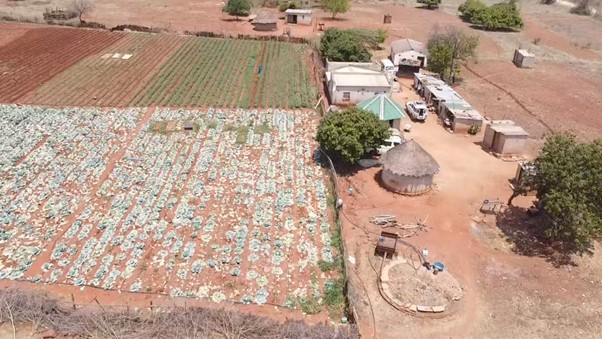
Munhamo started off her entrepreneurial journey by establishing a partnership with five women living with disabilities and a male colleague and initiated a horticulture project at her homestead. They made $70 contributions each as capital for the project. To ensure the success of the project, Munhamo’s supportive brothers facilitated the drilling of a borehole.
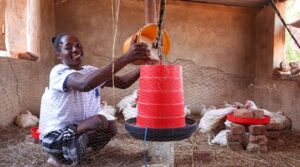
However, the project faced challenges as the limited resources had to be juggled between personal needs and operational expenses. Fortunately, CARE ZIMBABWE, in partnership with ECOBANK, came to the rescue through their Financial Inclusion for Improved Women Agency (FIIWA) project. Munhamo and her team were awarded a loan which allowed them to additionally start a poultry project with an initial investment of 150 chickens. They utilised the already existing infrastructure available for chicken rearing within Munhamo’s family compound.
“As people living with disabilities, we need to be resilient when it comes to projects and business, like everyone else we are not immune to challenges,” she said.
Concurrently, another organization, Mercy Corps Zimbabwe, reached out to her, offering training in tailoring and donating a sewing machine to her. This instantly became her alternative source of income through making ladies’ aprons and wrappers.
Deborah Goredema, Munhamo’s sister-in-law commended Annatolia’s resourceful lifestyle as it has relieved the family of their financial burden. She expressed gratitude and attested to her meaningful contribution towards the family’s upkeep. “It is a great initiative; we no longer must fend for her. I am very grateful that we are all benefiting from her projects,” commented Deborah.
Munhamo’s goal is to work with her team to establish conveniently- located individual projects. “We must work just like everybody else, but we should not strain ourselves beyond limits. Self-reliance brings dignity and yet self-destruction will make us lose our dignity as well, we just must balance it,” she validated.
Endowed with skills attained through the She Leads in Crisis Project and the Women Lead in Crisis projects, Annatoria has become an astute leader who can advocate and motivate fellow women living with disabilities to participate in issues that affect the community including gender-based violence, child marriages, risk and disaster management and climate change.
Notably, while the government has made significant strides for the improvement of the livelihoods of people living with disabilities, the contributions of non-governmental organisations working with people living with disabilities should be taken into cognisance. These organisations, reach out to people living with disabilities at the grassroots, fostering their involvement and participation in community projects, not as people living with disabilities but as equal human beings entitled to equal opportunities.
Such coherence and complimentary efforts between the government and non-governmental organizations in the Buhera district, of Manicaland province are simulative and have produced empowered female leaders such as Anatolia Munhamo. This kind of synergy goes a long way in fostering confidence in people living with disabilities while improving their livelihoods, and their dignity and at the same time encouraging acceptance within the community.