


REGINALD CHAPFUNGA
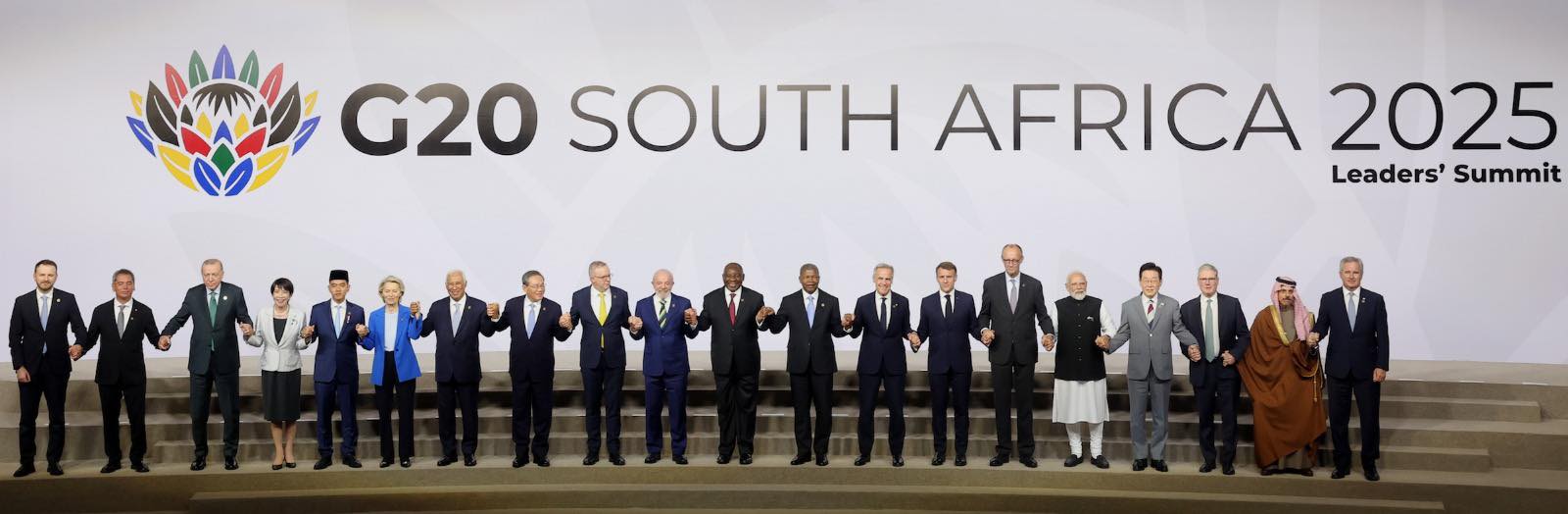
When the 2025 G20 Summit convened in Johannesburg, the symbolism was impossible to ignore. For the first time in its history, the world’s most influential economic bloc met on African soil. Yet the summit did far more than break geographic precedent. It placed Africa at the centre of global conversation, rooted its entire framework in the philosophy of Ubuntu, the African ethic that – I am because we are.
“We recognise that individual nations cannot thrive in isolation… and reaffirm our commitment to ensure that no one is left behind through multilateral cooperation and global partnerships for sustainable development,” the Leaders’ Declaration states.
For Zimbabwe and all African states, this was more than diplomatic language. It was a clear signal that the continent’s priorities, challenges and potential have finally moved from the sidelines to the centre of global governance.
Africa’s Development Demands Become Global Priorities
A striking feature of the declaration is the recognition of Africa’s structural challenges. Leaders highlighted that over 600 million Africans lack electricity access and 1 billion lack clean cooking solutions.
This framing aligns closely with energy debates across Southern Africa, where power shortages continue to constrain industrial growth and investment. The G20 endorsement of energy financing, technology sharing and the Mission 300 initiative, designed to connect 300 million Africans to electricity by 2030, has direct implications for Zimbabwe, where ongoing efforts to expand generation capacity require significant concessional finance and regional collaboration.
The declaration’s emphasis on clean cooking also resonates strongly with rural Southern Africa, where traditional fuels continue to pose health and environmental risks.
Debt Sustainability: A Lifeline for Economies Under Pressure
For Zimbabwe and other African states facing heavy repayment burdens, the G20’s frank assessment of the debt landscape is a welcome shift. The declaration warns that interest payments for low-income countries have more than doubled in the past decade, eroding fiscal space for development.
Crucially, the Leaders reaffirm their commitment to, “Support efforts by low and middle-income countries to address debt vulnerabilities in an effective manner.”
The push for enhanced transparency from creditors, crisis-resilient debt clauses and deeper reform of IMF and World Bank debt assessment methodologies gives African countries stronger ground in future negotiations. For Zimbabwe, which is pursuing arrears clearance and re-engagement, the global shift toward fairer debt treatment strengthens diplomatic leverage.
 Critical Minerals: Rewriting the Rules of Value Extraction
Africa’s mineral wealth sits at the centre of global energy transitions, and the G20 recognises this with rare clarity. The declaration notes that producer countries often fail to realise the benefits of their mineral endowments due to limited value addition and underinvestment. It welcomes the G20 Critical Minerals Framework, which supports beneficiation at source and stronger governance.
For Zimbabwe — home to significant lithium, platinum group metals and rare earth deposits — this is particularly significant. The emphasis on local processing and industrialisation aligns with Harare’s policy direction, which has prioritised value addition and discouraged raw mineral exports. The shift in global thinking could unlock more supportive financing and technology partnerships.
Climate Finance and Adaptation: Africa’s Case Gains Strength
Perhaps the most powerful climate statement in a G20 text to date, the declaration reaffirms the targets of the Paris Agreement and acknowledges that developing countries require USD 5.8 to 5.9 trillion before 2030 to implement their climate commitments.
It also highlights the disproportionate impact of climate shocks on countries least able to adapt, a reality Zimbabwe knows too well from recurring droughts, floods and cyclones.
Equally important is the call to scale up adaptation, early warning systems and desertification responses — critical issues for the Southern African region. By linking climate action to equity, the G20 provides a more persuasive framework for African states seeking climate finance without sacrificing development.
Food Security and Agricultural Transformation
With up to 720 million people globally experiencing hunger in 2024, the declaration calls for stronger food systems and international support for smallholder farmers.
African-led programmes, such as CAADP and the AfCFTA, receive explicit endorsement.
For Zimbabwe, where agriculture remains the backbone of the economy, the G20’s focus on resilience, storage infrastructure and local food production aligns with national priorities. The emphasis on women and youth in agriculture reflects the demographics of Zimbabwe’s rural workforce, where empowerment remains key to productivity.
A Loud Call for Global Governance Reform
One of the most consequential chapters for Africa is the section on UN reform. Leaders call for a “transformative reform” of the Security Council, expanding representation for Africa and other underrepresented regions.
For Zimbabwe, which has long championed reform of global institutions, this marks a milestone moment where Africa’s demands are acknowledged within the world’s most influential economic forum.
What the Johannesburg Summit Means for Zimbabwe and the Continent
The 2025 G20 Summit did not merely host Africa — it listened to Africa. The Johannesburg Leaders’ Declaration situates the continent not as a passive recipient of development support but as a co-author of global solutions.
For Zimbabwe, the outcomes offer new diplomatic opportunities
- Stronger leverage in debt and arrears negotiations
- Potential energy transition finance
- Support for mineral beneficiation policies
- Alignment with global climate finance commitments
- Reinforcement of its voice in UN reform debates
Most importantly, the summit reframed global cooperation around a distinctly African ethic: that prosperity is shared, humanity is collective and progress is only meaningful when no one is left behind